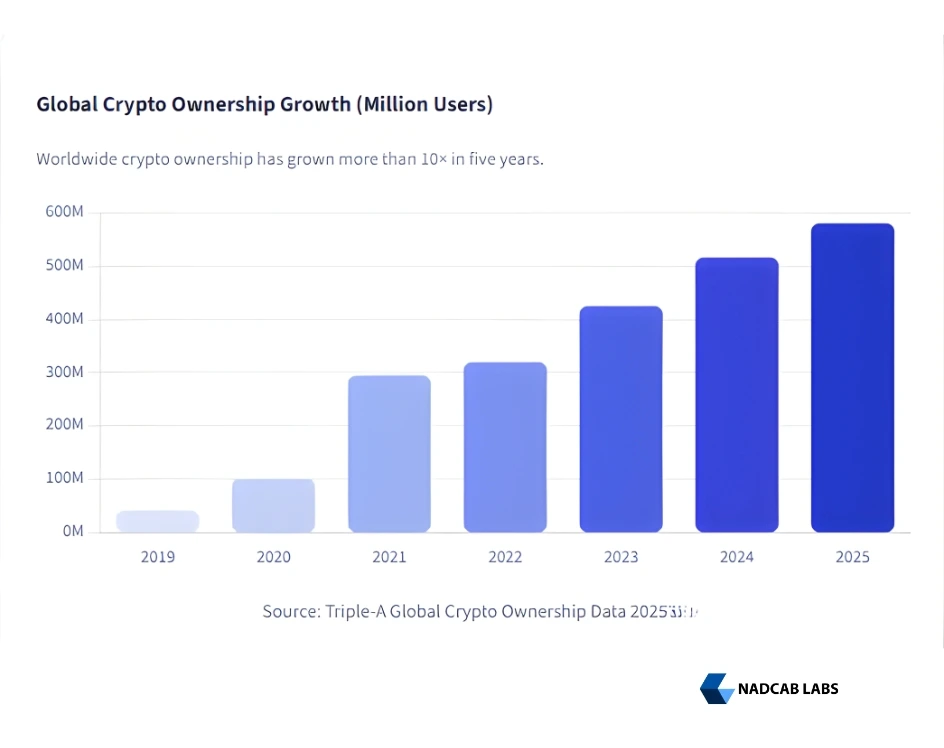
Bitcoin has come a long way from being internet folklore. Today it sits inside the portfolios of pension funds, Fortune 500 balance sheets, and over half a billion individual holders around the world. Yet for every experienced crypto trader, there are millions of people who still have one simple question: how do I actually buy it?
This guide strips away the noise. No jargon, no speculation about price predictions, and no pressure to buy more than you are comfortable with. Just a clear, practical walkthrough of every step you need to take, from setting up your first account to storing Bitcoin in a wallet that nobody else can touch.
Key Takeaways
- Multiple Purchase Options: Bitcoin can be bought through centralized exchanges (0.1-1.5% fees), payment apps like PayPal and Cash App, Bitcoin ETFs for US investors, P2P platforms, ATMs (7-15% fees), or OTC desks for large purchases over $50,000.
- Security Is Non-Negotiable: Enable two-factor authentication using authenticator apps (not SMS), never share your seed phrase with anyone, and withdraw Bitcoin to personal wallets for holdings above $500-$1,000 to maintain true ownership.
- Choose Payment Methods Wisely: Bank transfers (ACH) and India’s UPI offer lowest fees (free-1%), while credit cards trigger cash advance fees (2-4%) and should be avoided for crypto purchases to minimize costs.
- Understand Two Fee Layers: Trading fees charged by exchanges (0.1-1.5%) differ from Bitcoin network miner fees ($1-$50+ based on congestion), with both impacting total costs requiring strategic timing and platform selection.
- Dollar-Cost Averaging Works: Investing fixed amounts at regular intervals eliminates emotional timing decisions, spreads risk across multiple price points, and can be automated on most exchanges for consistent accumulation strategies.
- Tax Treatment Varies Globally: US investors face capital gains taxes (0-37% depending on holding period), while India imposes flat 30% tax on crypto profits with 1% TDS and no loss offsetting between different assets.
- Scams Cost Billions Annually: The FBI reported $3.94 billion in crypto-related fraud losses in the United States in 2023, primarily due to phishing websites, fake giveaways, romance scams, and counterfeit wallet apps. Never share your private keys or seed phrases with anyone.
- Custody Determines Ownership: Bitcoin held on exchanges remains under exchange control, not yours; personal wallets (hardware devices like Ledger/Trezor for cold storage or software for hot wallets) provide true ownership through private key control.
What Exactly Is Bitcoin?
Bitcoin is a digital currency that runs on a technology called the blockchain, a public ledger that permanently records every transaction ever made. No single bank, government, or company controls it. Transactions are verified by a global network of computers called nodes. To understand how that network stays honest, it helps to read about what a Bitcoin node does in the blockchain.
Bitcoin was invented in 2009 by someone using the pseudonym Satoshi Nakamoto. Its total supply is permanently capped at 21 million coins, a design decision that makes it mathematically scarce in a way physical gold only approximately achieves.[1]
Unlike a stock or bond, Bitcoin does not represent a claim on a company’s earnings. Its value comes from its scarcity, its decentralized network security, and most practically, from the growing number of people and institutions willing to hold it. The deeper trends behind all of this are well-captured in the 2025 Bitcoin expert insights overview.
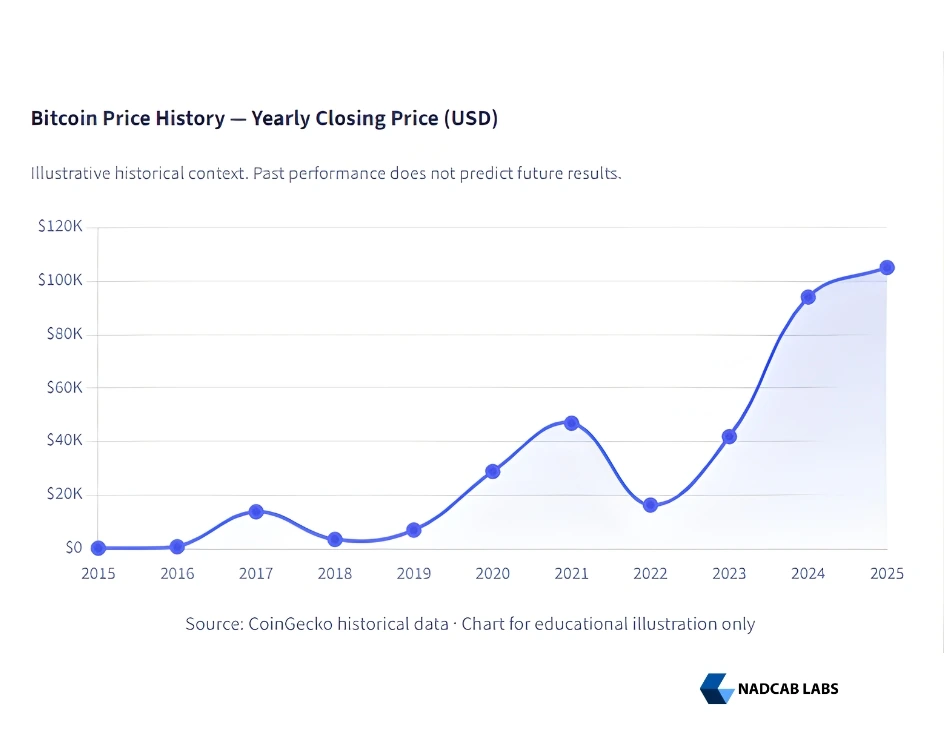
Why Buying Bitcoin the Right Way Actually Matters
In 2023, the FBI reported over $3.94 billion in crypto-related fraud losses in the United States alone.[2] The overwhelming majority of those losses were not due to Bitcoin itself being hacked, the blockchain has never been compromised. The losses occurred because people used unregulated exchanges, fell for scams, or stored Bitcoin carelessly.
There is a second reason doing this correctly matters: fees. If you buy Bitcoin using the wrong payment method on the wrong platform, you could easily pay 4–7% in combined fees before you even own a single satoshi. The difference between a smart first purchase and a careless one can be real money.
Understanding the economics behind crypto assets, why some hold value and others don’t, is also worthwhile before you invest. The guide to tokenomics in blockchain gives a solid foundation for understanding how supply, demand, and distribution shape asset values.
8 Ways to Buy Bitcoin
| # | Method | Ease | Typical Fee | True Ownership? | Best For |
|---|---|---|---|---|---|
| 1 | Centralized Exchange (CEX) | Easy | 0.1–1.5% | ✅ If you withdraw | Most beginners |
| 2 | Robinhood / PayPal / Cash App | Easiest | Spread (~1%) | ⚠️ Limited | Casual buyers |
| 3 | Bitcoin ETF (USA) | Easy | 0.2–0.5% MER | ❌ Fund holds BTC | US brokerage users |
| 4 | P2P Platform | Medium | 0.5–2% | ✅ Yes | India / unbanked users |
| 5 | Bitcoin ATM | Medium | 7–15% | ✅ Yes | Cash-only buyers |
| 6 | Dollar-Cost Averaging (DCA) | Easy | Same as CEX | ✅ If you withdraw | Long-term investors |
| 7 | Crypto Debit Card Rewards | Easy | None (cashback) | ⚠️ Platform custody | Passive accumulators |
| 8 | OTC Desk | Advanced | 0.1–0.5% | ✅ Yes | $50,000+ buyers |
For most first-time buyers, a centralized exchange is the right answer. It is regulated, insured in some jurisdictions, and handles the technical complexity for you. Dollar-cost averaging through a recurring buy on the same exchange is the next thing worth setting up once you are comfortable with the platform.
Choosing the Right Exchange
| Exchange | Best For | Trade Fee | KYC | USA | India | Verdict |
|---|---|---|---|---|---|---|
| Coinbase | US Beginners | 0.5–1.5% | Required | ✅ | Limited | Top Pick USA |
| Binance / Binance.US | Low-fee global | 0.1% | Required | ⚠️ .US only | ✅ | Best Fees |
| Kraken | Security-first | 0.16–0.26% | Required | ✅ | Limited | Safest Track Record |
| Gemini | US compliance | 0.2–0.4% | Required | ✅ | ❌ | Best US Regulated |
| Robinhood | Casual US buyers | Spread only | Required | ✅ | ❌ | No self-custody |
| WazirX | India market | 0.2% | Required | ❌ | ✅ | Top Pick India |
| CoinDCX | India beginners | 0.1% | Required | ❌ | ✅ | Top Pick India |
| ZebPay | India experienced | 0.15% | Required | ❌ | ✅ | Good Alternative |
It is also worth understanding what goes into building and running one of these platforms. The crypto exchange platform guide explains the technology stack, and the operational cost breakdown shows exactly why fee structures differ so much between platforms.
How to Buy Bitcoin: Step by Step Guide
Buying Bitcoin may seem tricky at first, but it’s actually easy once you know the steps. We’ll use Coinbase for U.S. buyers and CoinDCX for Indian buyers as examples, though the process is very similar on most regulated exchanges.
Step 1: Create Your Exchange Account
First, go directly to the exchange’s official website. Always bookmark it and avoid clicking on ads in search engines. Click “Sign Up” and enter your email and a strong password you’ve never used before. A password manager like Bitwarden can help you generate and remember a strong password safely.
Step 2: Secure Your Account with Two-Factor Authentication
Before buying anything, turn on two-factor authentication. This adds an extra layer of security to your account. Use an authenticator app like Google Authenticator or Authy rather than SMS codes, which can be hacked through SIM-swapping.[3]
Step 3: Complete Identity Verification (KYC)
All regulated exchanges require Know Your Customer (KYC) verification. You will need to upload a government-issued ID, such as a passport or driver’s license, and take a selfie. This usually takes 5–30 minutes. If you don’t complete KYC, your buying limits will be very low. For guidance, Coinbase offers a detailed ID verification guide.[4]
Step 4: Add Your Payment Method
Next, link your bank account, debit card, or in India, your UPI ID. Bank transfers usually have the lowest fees but take a little longer. Debit cards are faster but may charge 1.5–3% in fees. Credit cards work, but your bank may treat them as cash advances and charge extra fees. For amounts over $100, a bank transfer is usually the smartest choice.
Step 5: Place Your Bitcoin Buy Order
Go to the “Buy Bitcoin” page (ticker: BTC). Enter the amount you want to spend in dollars or rupees, and the exchange will calculate how much BTC you’ll receive. There are two main types of orders:
- Market order: Buys instantly at the current price.
- Limit order: Lets you set a price, and your purchase only happens if Bitcoin reaches that price.
For beginners, market orders are easier to use.
Step 6: Check Fees Before Confirming
Before confirming your purchase, check the fees.
Fees are usually higher when you use a debit or credit card instead of a bank transfer. Make sure the fee matches your expectations, then confirm the transaction.
Step 7: Move Bitcoin to Your Personal Wallet
If you’re buying a larger amount (over $500–$1,000), consider moving your Bitcoin to a personal wallet. A wallet gives you full control of your Bitcoin, unlike keeping it on an exchange. This extra step helps protect your investment from exchange hacks.
Following these steps makes buying Bitcoin safe and straightforward. Remember, always double-check websites, use strong passwords, and enable 2FA for the best security.
Payment Methods: What to Use and What to Avoid
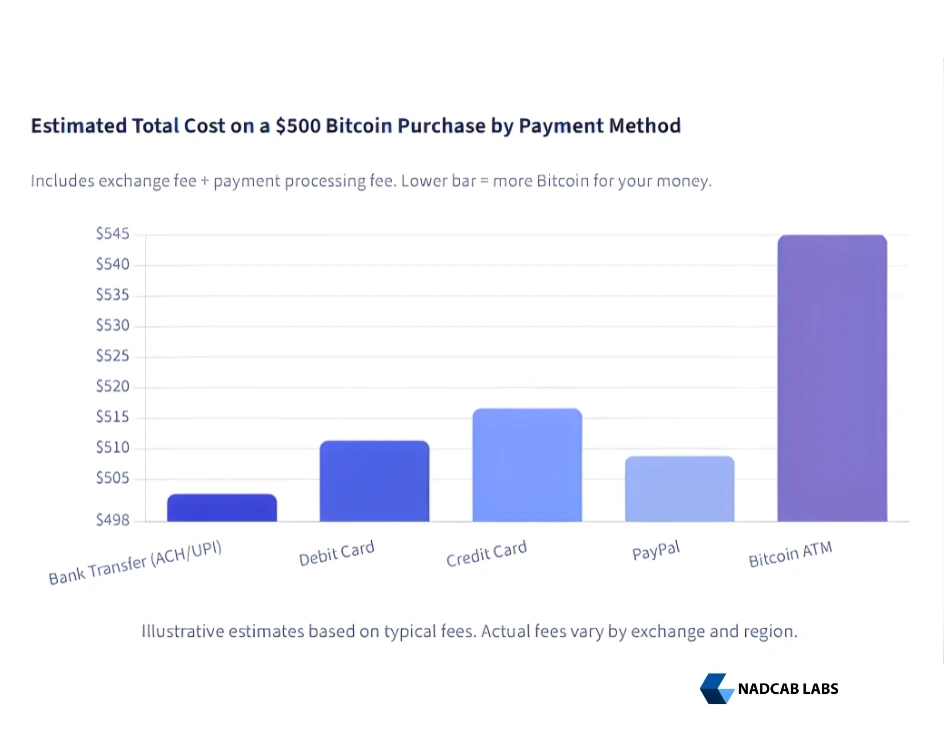
The payment method you choose affects both cost and speed. Here is a clear comparison.
| Method | Speed | Fee Range | Available In | Recommendation |
|---|---|---|---|---|
| Bank Transfer (ACH) | 1–3 days | Free–1% | USA, Global | ✅ Best for regular buys |
| UPI / IMPS | Instant–30 min | Free–0.5% | India | ✅ Best for India |
| Debit Card | Instant | 1.5–3% | Global | ⚠️ Use for small urgent buys |
| Credit Card | Instant | 2–4% | Global | ❌ Avoid, cash advance fees |
| PayPal | Instant | 1.5–2.3% | USA, UK | ⚠️ Limited withdrawal |
| Wire Transfer | 1–3 days | Flat bank fee | Global | ✅ Best for $10,000+ |
If you are in India, UPI is genuinely the best way to fund your account. Exchanges like CoinDCX and WazirX support instant INR deposits through UPI with zero or near-zero fees. For context on everything else available in India’s crypto ecosystem, understanding the difference between crypto coins and tokens is a great next read.
How to Keep Your Bitcoin Safe from Hacks
Here is the uncomfortable truth: every major crypto exchange hack in history, from Mt. Gox in 2014 to FTX in 2022, has resulted in users losing Bitcoin they believed was safely “in their account.” The reason is simple. When your Bitcoin is stored on an exchange, the exchange controls it, not you.
The fix is a Bitcoin wallet, a piece of software or hardware that holds your private keys, which are the cryptographic proof that you own your Bitcoin. The guides on how to create a Bitcoin wallet walk you through the setup in detail.
Hot Wallet (Online)
- Internet-connected at all times
- Apps: Trust Wallet, Exodus, Electrum
- Also includes exchange accounts
- Great for active, smaller amounts
- Risk: vulnerable if device is compromised
Cold Wallet (Offline)
- Never connected to the internet
- Devices: Ledger Nano X, Trezor Model T
- Also: paper wallets (advanced only)
- Best for long-term, larger holdings
- Cost: $70–$200 for a hardware device
The Two Things You Must Protect
Private key: The unique cryptographic string that proves ownership of your Bitcoin. In most modern wallets, you never see this directly, it is managed by your seed phrase.
Seed phrase: A sequence of 12 or 24 random words generated when you create a wallet. This phrase can restore your entire wallet on any device. It is the single most important thing you will ever write down in crypto.
Buying Bitcoin in the USA vs. India
The IRS classifies Bitcoin as property, not currency. That means every time you sell Bitcoin, trade it for another coin, or spend it on something, you create a taxable event.[5] You calculate your capital gain or loss by comparing what you received against your original cost (your cost basis).
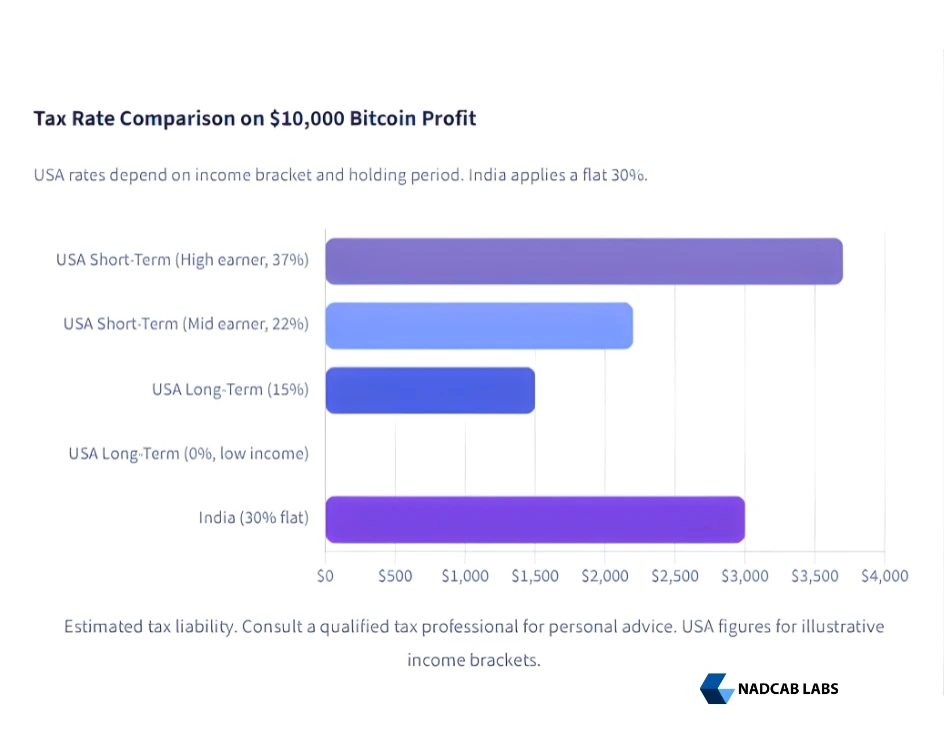
If you hold an asset for less than one year, any gains are taxed as short-term capital gains at your regular income tax rate, which can be as high as 37% in the United States. Hold for over one year and the long-term capital gains rate applies (0%, 15%, or 20% depending on your income), which is significantly lower for most people. The SEC approved spot Bitcoin ETFs in January 2024, allowing exposure through standard brokerage accounts without managing wallets at all.[6]
India: The 30% Flat Tax and What It Means
Since April 2022, all profits from virtual digital assets (VDAs) in India, including Bitcoin, are taxed at a flat 30% with no deductions beyond the cost of acquisition.[7] On top of that, a 1% TDS (Tax Deducted at Source) is applied to qualifying transactions above ₹10,000 per year.
One of the biggest limitations for Indian investors is that they cannot offset losses from one crypto asset against gains from another. For example, if you incur a ₹50,000 loss on an altcoin but earn a ₹80,000 profit on Bitcoin, you are still required to pay 30% tax on the full ₹80,000 gain. The loss cannot be adjusted against the profit under current tax rules.
Additionally, in 2022, the Reserve Bank of India clarified that banks cannot deny services to crypto businesses solely because they deal in digital assets. This clarification helped ensure smoother operations for cryptocurrency exchanges across India..[8]
Understanding Bitcoin Fees
| Fee Type | Charged By | Typical Amount | When It Applies | How to Minimize |
|---|---|---|---|---|
| Trading fee | Exchange | 0.1–1.5% | Every buy/sell | Use a low-fee exchange; build trading volume |
| Deposit fee | Exchange | 0–3% | Funding via card or bank | Use bank transfer instead of card |
| Withdrawal fee | Exchange | $2–$15 flat | Moving BTC off exchange | Batch withdrawals; avoid small moves |
| Network (miner) fee | Bitcoin blockchain | $1–$50+ (variable) | Every on-chain transaction | Use mempool.space to time low-fee periods |
| Spread | Market makers | 0.1–1% | Built into quoted price | Use limit orders on maker-taker exchanges |
Bitcoin network fees fluctuate dramatically based on blockchain congestion. During bull runs or around halving events, transaction fees can spike to $30 to $50 per transaction. You can monitor real-time fee conditions at Mempool.space to decide when it is cheapest to move Bitcoin.
An interesting dimension here is Bitcoin Ordinals, a newer system that allows data to be inscribed directly onto individual satoshis. This has, at times, significantly increased network congestion and fees. The guide to what Bitcoin Ordinals are explains this phenomenon clearly.
Scams and Mistakes to Avoid
Most Bitcoin losses are not caused by technology failures. They are caused by predictable and avoidable mistakes. Here are the ones that claim the most victims.
Scams That Are Active in 2026
Celebrity giveaway scams: A fake social media post, supposedly from Elon Musk, Michael Saylor, or another celebrity, promises to “double” your Bitcoin if you send them some. It is always a scam. No legitimate person doubles Bitcoin for free, ever.[9]
Pig-butchering romance scams: Someone builds a relationship with you online over weeks or months before introducing you to a “great” crypto investment platform. The platform turns out to be fake. The FBI describes this as one of the fastest-growing types of fraud, with billions of dollars lost annually.
Phishing websites: Scammers clone exchange websites using nearly identical URLs (for example, coinbasse.com instead of coinbase.com). Always access your exchange by typing the official URL directly into your browser or using a trusted bookmark.
Fake wallet apps: App stores occasionally contain counterfeit wallet apps that are designed to steal users’ seed phrases. Only download wallets from the official developer’s website. Check reviews, the developer’s name, and download count carefully.
Pump-and-dump groups: Telegram and Discord channels often hype obscure coins so insiders can sell at a profit. If a stranger online is giving you “hot tips,” that’s a red flag, not an opportunity.
Mistakes Beginners Make
Buying during FOMO peaks: When Bitcoin is all over the news and everyone is talking about it, the price is usually at a local high. Dollar-cost averaging buying a fixed amount at regular intervals, produces better average entry prices for most people and removes emotional decision-making from the equation.
Leaving everything on an exchange forever: Exchanges have collapsed (such as FTX in 2022), been hacked (such as Bitfinex in 2016), and imposed withdrawal freezes. For any amount of Bitcoin you genuinely care about, learn how to create a personal wallet and take custody of your own private keys.
Sending to the wrong address: Blockchain transactions are irreversible. Always verify the entire destination address, not just the first and last few characters, since some clipboard-hijacking malware can silently replace a copied address with a fraudulent one.
The Dollar-Cost Averaging Strategy
Rather than trying to time the market, which even professional fund managers consistently fail at, most long-term Bitcoin holders use a strategy called dollar-cost averaging (DCA). The concept is simple: invest a fixed amount at regular intervals, regardless of price.
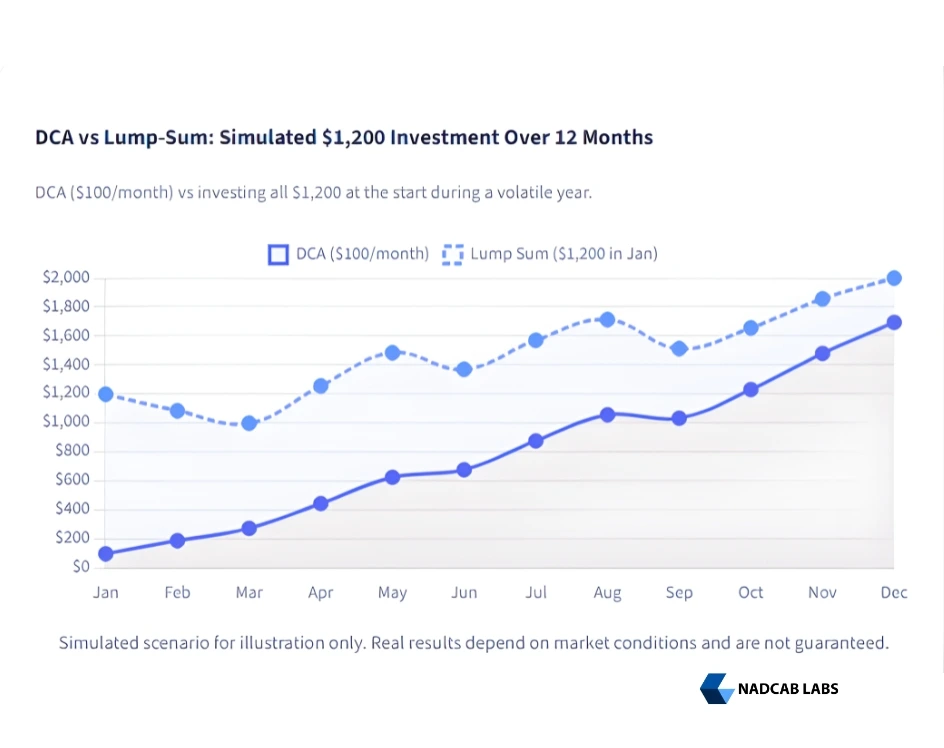
DCA does not guarantee profits. But it does eliminate the psychological trap of trying to buy at the “perfect” moment, and it spreads your risk across multiple price points over time.
Is Bitcoin Legal?
Bitcoin is legal in the vast majority of countries, the USA, Canada, UK, all EU member states, Australia, Japan, Singapore, India, Brazil, and most of the world. The global trend in 2026 is firmly toward clearer regulatory frameworks rather than prohibitions. A small number of countries, including China, have restricted trading (though not personal ownership).
For real-world data on where Bitcoin adoption is growing fastest, the Chainalysis Global Crypto Adoption Index tracks actual transaction volumes by country and is one of the most respected sources in the industry.[10]
⚡ Quick Facts: Bitcoin by the Numbers (2026)
Conclusion
Buying Bitcoin is genuinely simple once you understand the landscape. Pick a regulated exchange for your country, complete the identity verification, fund your account via bank transfer (it is the cheapest way), and place your first order. The whole process from sign-up to owning Bitcoin takes under an hour.
What takes a little longer, but matters just as much, is the security setup. Enable 2FA, write down your seed phrase if you create a personal wallet, and resist the urge to keep large amounts sitting on an exchange indefinitely. These habits are what separate the people who hold Bitcoin successfully for years from the ones who have a bad story to tell.
If you are curious about going deeper, understanding how crypto tokens are designed, launched, and valued,the Nadcab labs library has you covered. The guide to launching a crypto token, the token creation walkthrough, and the expert token developer directory are all worth bookmarking for when you are ready to go beyond buying.
Frequently Asked Questions
Pick a regulated exchange for your country (Coinbase for the USA, CoinDCX for India). Sign up, verify your identity (KYC), link a bank account or debit card, then search for Bitcoin and enter the amount you want to spend. The exchange converts your local currency to BTC automatically. Start small — $20–$50 is enough to learn the process without risking meaningful money.
Yes — and most buyers do. Bitcoin is divisible into 100 million units called satoshis. You can buy $10 or ₹500 worth of Bitcoin. You will own a precise fraction of one coin, stored exactly like a whole coin would be. There is no minimum investment in Bitcoin itself beyond the exchange’s minimum order size.
Buying on a regulated exchange like Coinbase, Gemini, or Kraken is generally safe. The risks come from price volatility (Bitcoin’s value can swing sharply), user security errors (losing passwords, falling for phishing), and exchange risk (exchanges can fail). Use 2FA, strong passwords, and move meaningful amounts to a personal wallet. The biggest risk for most people is themselves — not the technology.
Coinbase for absolute beginners (NASDAQ-listed, excellent UI). Gemini for compliance-focused users (SOC 2 certified). Kraken for security-conscious buyers (never been hacked). Binance.US for the lowest fees once you are comfortable. Robinhood for people who want Bitcoin alongside stocks in one app — though note it does not offer self-custody.
Reviewed & Edited By

Aman Vaths
Founder of Nadcab Labs
Aman Vaths is the Founder & CTO of Nadcab Labs, a global digital engineering company delivering enterprise-grade solutions across AI, Web3, Blockchain, Big Data, Cloud, Cybersecurity, and Modern Application Development. With deep technical leadership and product innovation experience, Aman has positioned Nadcab Labs as one of the most advanced engineering companies driving the next era of intelligent, secure, and scalable software systems. Under his leadership, Nadcab Labs has built 2,000+ global projects across sectors including fintech, banking, healthcare, real estate, logistics, gaming, manufacturing, and next-generation DePIN networks. Aman’s strength lies in architecting high-performance systems, end-to-end platform engineering, and designing enterprise solutions that operate at global scale.