Key Takeaways
- Genesis blocks serve as the immutable foundation of blockchain networks, establishing the cryptographic root from which all subsequent blocks derive their validity and security.
- Initial economic allocations defined in genesis blocks determine token distribution, supply schedules, and stakeholder balances that influence network dynamics throughout its lifetime.
- Consensus rules locked into genesis configuration create permanent constraints on protocol behavior, making fundamental changes require hard forks or new network launches.
- Timestamp semantics embedded in genesis blocks establish the official starting point of blockchain history, affecting difficulty adjustments and temporal validation logic.
- Network bootstrapping requires all full nodes to validate against the exact genesis block hash, ensuring global consensus on the chain’s origin point.
- Hardcoded genesis blocks in client software create trust assumptions where users implicitly accept the initial state by running specific software versions.
- Famous genesis blocks contain hidden messages and metadata reflecting the philosophical motivations and historical context of their creators at network inception.
- Proof-of-work and proof-of-stake systems implement genesis blocks differently, encoding distinct validation requirements appropriate to their consensus mechanisms.
- Poor genesis block configuration creates security vulnerabilities including centralized token distribution, weak cryptographic parameters, and governance capture risks that persist indefinitely.
The genesis block represents the foundational element of every blockchain network, serving as the cryptographic and economic starting point from which all subsequent blocks derive their validity. Understanding genesis block architecture proves essential for comprehending how distributed ledgers establish trust, maintain immutability, and enforce consensus rules across decentralized networks. Blockchain technology relies on genesis blocks to create the initial state that every network participant must accept as the canonical origin of the chain. Unlike regular blocks that reference previous block hashes, genesis blocks have no predecessor, making them unique architectural components with special properties and constraints. Major blockchain networks implement genesis blocks with varying designs reflecting their distinct philosophical approaches, economic models, and technical requirements. Bitcoin’s genesis block contains Satoshi Nakamoto’s famous embedded message about bank bailouts, establishing both technical infrastructure and ideological foundation. As blockchain adoption accelerates across enterprise and institutional sectors in 2026, proper genesis block configuration has become critical for ensuring long-term network security and governance stability.[1]
Genesis Block Architecture and Its Role in Chain Immutability
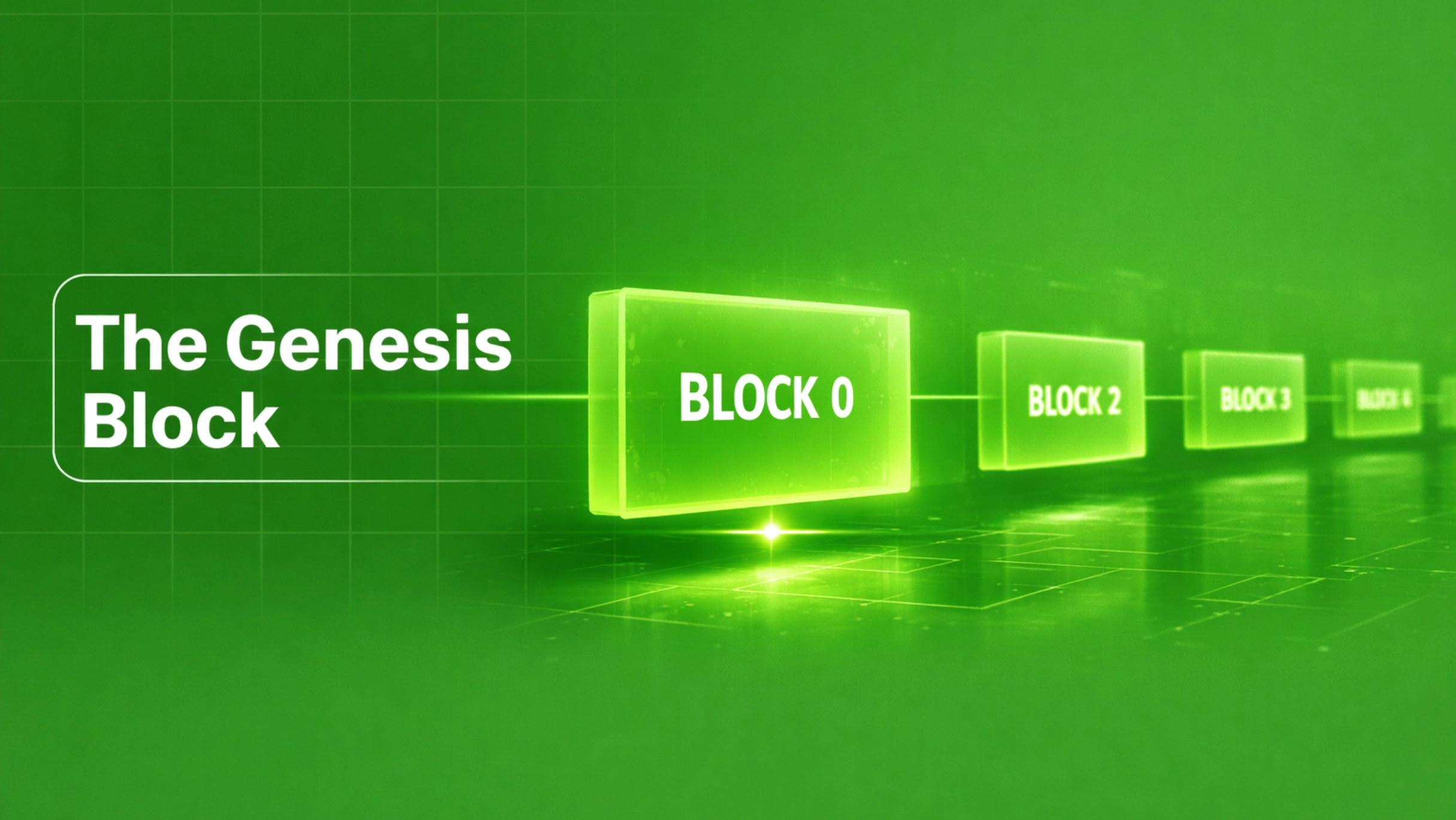
Genesis block architecture differs fundamentally from standard blockchain blocks due to its unique position as the chain’s origin point. The genesis block contains all essential block header elements including version number, timestamp, difficulty target, nonce, and merkle root, but crucially lacks a previous block hash since no block preceded it. This architectural distinction creates the foundation for blockchain immutability as every subsequent block cryptographically links back to its predecessor, forming an unbroken chain terminating at genesis. The genesis hash becomes the anchor point that full nodes use to verify they’re synchronized to the correct chain, preventing malicious actors from substituting alternative histories. Immutability emerges from this linked structure because altering any historical block requires recalculating all subsequent block hashes, an operation that becomes computationally infeasible as the chain grows. The genesis block establishes the cryptographic root of trust, and its permanent hardcoding into client software ensures that all network participants begin validation from an identical starting state. Modern blockchain architectures leverage this immutability property to build applications requiring tamper-proof historical records, with genesis blocks serving as the mathematical foundation guaranteeing data integrity across distributed systems without central authorities.
 Core Genesis Block Components
Block Header Fields
Version number, timestamp, difficulty target, nonce, and merkle root define the cryptographic structure while the previous hash field contains zeros or custom placeholder values.
Initial Transactions
Coinbase transaction allocating initial token supply to designated addresses, establishing the economic starting state and distribution model for the entire network.
Embedded Metadata
Custom messages, historical references, or philosophical statements encoded into block data, providing context about creator intentions and network launch circumstances.
Why Genesis Block Parameters Can Never Be Rewritten or Forked
Genesis block parameters achieve permanent immutability through multiple reinforcing mechanisms that make retroactive changes technically impossible and economically irrational. The cryptographic hash linking mechanism ensures that modifying the genesis block would change its hash, which propagates through every subsequent block in the chain, requiring recalculation of potentially billions of blocks accumulated over years. This computational barrier becomes insurmountable as proof-of-work chains grow, since recreating equivalent work would cost more than the entire network’s historical mining expenditure. Beyond computational infeasibility, genesis blocks are hardcoded directly into node client software, meaning any change requires releasing new software that would initialize a completely different chain rather than modifying the existing one. Network participants running the original software would reject blocks from the modified genesis chain, creating a permanent fork where two incompatible networks exist independently. Social consensus reinforces technical immutability because established networks have accumulated significant economic value, user adoption, and ecosystem infrastructure dependent on the specific genesis configuration. Attempting to change genesis parameters requires convincing every ecosystem participant to abandon their investment in the current chain and migrate to a new one, a coordination challenge that becomes impossible at scale. This multi-layered immutability protects fundamental network properties from retroactive manipulation, ensuring that participants can trust the historical ledger and base long-term decisions on stable protocol foundations.
Hardcoded Genesis Blocks and Client-Level Trust Assumptions
Hardcoding genesis blocks directly into client software source code creates fundamental trust assumptions that users implicitly accept when choosing to run specific node implementations. Bitcoin Core, Ethereum’s Geth, and other major clients include genesis block definitions as constant data structures that cannot be modified without recompiling the entire application. This design decision means users trust that the software developers correctly specified the genesis parameters and that the distributed binary they download contains the authentic genesis configuration. The trust assumption extends to believing that the genesis state represents fair initial allocation, appropriate consensus rules, and secure cryptographic parameters. Users running pre-compiled binaries must trust the build process, distribution channels, and signing keys used to verify software authenticity. Open-source transparency mitigates these concerns by allowing anyone to audit genesis block configurations in source code repositories, verify that distributed binaries match published source code, and compile their own clients from reviewed code. However, practical limitations mean most users run pre-built clients without personal verification, creating de facto trust in maintainer honesty and competence. This client-level trust forms the base layer of blockchain security, preceding and enabling the trustless verification that occurs for all subsequent blocks. Understanding these trust assumptions helps users make informed decisions about which networks to participate in and which client implementations to run.
Economic Design Decisions Embedded Inside Genesis Blocks
Genesis blocks encode critical economic parameters that permanently influence network monetary policy, wealth distribution, and incentive structures throughout the blockchain’s lifetime. Initial supply allocation determines which addresses receive tokens at network launch, establishing the starting distribution that affects power dynamics and governance control. Bitcoin’s genesis block mined the first 50 BTC to Satoshi Nakamoto’s address, while Ethereum’s genesis distributed approximately 72 million ether to crowdsale participants, founders, and the foundation. These allocation decisions create path dependencies where early stakeholders gain disproportionate influence over network evolution through their economic weight. Supply schedules embedded in genesis configurations define emission rates, halving events, and maximum supply caps that shape long-term monetary characteristics. Inflation rates, block rewards, and fee distribution mechanisms established at genesis create economic incentives that attract or repel different types of network participants. Proof-of-stake networks encode initial validator sets and minimum staking requirements in their genesis blocks, determining who can participate in consensus and earn rewards from inception. Economic design choices made during genesis block creation often prove irreversible, as changing fundamental monetary policy requires hard forks that split the network and dilute ecosystem effects. Understanding genesis economics helps users evaluate whether a network’s monetary policy aligns with their values and investment theses.
Genesis Block Economic Parameters Comparison
| Network | Initial Supply | Maximum Supply | Genesis Allocation |
|---|---|---|---|
| Bitcoin | 50 BTC | 21 million BTC | Mining reward to creator |
| Ethereum | 72 million ETH | No hard cap | Crowdsale, foundation, early contributors |
| Cardano | 31 billion ADA | 45 billion ADA | ICO participants, founders, treasury |
| Solana | 500 million SOL | Inflationary model | Team, foundation, validators, community |
How Initial Supply and Allocation Are Defined at Genesis
Initial supply and allocation mechanisms defined in genesis blocks establish the economic foundation upon which all future network activity builds. The genesis transaction, often called the coinbase transaction, specifies exact token quantities and recipient addresses that receive the initial allocation. Bitcoin’s approach started with zero pre-allocation, distributing all coins through mining rewards over time, while many modern networks pre-allocate significant percentages to developers, foundations, early investors, and community treasuries. Ethereum’s genesis block allocated approximately 60% to crowdsale participants who purchased ether during the 2014 fundraising campaign, with remaining portions distributed to the Ethereum Foundation and early contributors. This pre-allocation model enables project funding without ongoing inflation but concentrates wealth among early participants potentially creating governance centralization. Proof-of-stake networks must allocate sufficient initial supply to validators for network security, sometimes creating tension between decentralization ideals and practical bootstrapping requirements. Transparency in genesis allocation becomes critical for community trust, as hidden allocations or unclear distribution mechanisms can undermine network legitimacy. Some projects implement vesting schedules restricting when genesis recipients can transfer tokens, though these restrictions must be enforced through external mechanisms since blockchain itself cannot prevent transactions once addresses control private keys. Understanding genesis allocation helps users evaluate whether token distribution aligns with claimed decentralization principles and whether early stakeholder concentration poses governance risks.
Timestamp Semantics and Their Impact on Blockchain History
Genesis block timestamps mark the official birth of blockchain networks, establishing the temporal anchor from which all subsequent block times are measured and validated. Bitcoin’s genesis block timestamp of January 3, 2009, at 18:15:05 GMT becomes the zero point for Bitcoin’s history, though interestingly this timestamp predates the first non-genesis block by six days, suggesting Satoshi may have mined blocks privately before public launch. Timestamp semantics affect difficulty adjustment algorithms that use time intervals between blocks to calibrate mining difficulty, making the genesis timestamp a critical input for maintaining target block production rates. Proof-of-stake networks use timestamps to enforce slot timing, validator rotation schedules, and epoch boundaries, all calibrated relative to the genesis timestamp. Temporal validation rules often require that each block’s timestamp exceeds its predecessor’s timestamp and falls within acceptable bounds relative to network time, with genesis establishing the earliest valid timestamp. Smart contracts leveraging block timestamps for time-dependent logic inherit the genesis timestamp as the earliest possible execution time, affecting applications like vesting schedules and time-locked transactions. Forensic blockchain analysis uses timestamps to reconstruct historical events, though timestamp manipulation within protocol-allowed bounds means they provide only approximate temporal ordering rather than perfect chronological records. Genesis timestamps also carry symbolic significance, with some projects choosing dates aligned with meaningful events or anniversaries to signal their philosophical commitments and historical connections.
Genesis Timestamp Applications
Difficulty adjustment calculations measuring time intervals between blocks to maintain consistent block production rates across network hashrate fluctuations
Validator rotation scheduling in proof-of-stake systems coordinating block proposal rights and attestation duties based on elapsed time since genesis
Smart contract time-lock enforcement ensuring tokens cannot be transferred before specified durations measured from genesis timestamp baseline
Historical analysis and forensic investigation reconstructing event timelines from blockchain data anchored to genesis temporal reference point
Emission schedule calculations determining block rewards and halving events based on time elapsed or block height relative to genesis
Genesis Block Hashing Differences Across Major Blockchains
Genesis block hashing implementations vary significantly across blockchain networks reflecting different technical architectures, security models, and design philosophies. Bitcoin’s genesis block uses the SHA-256 hashing algorithm twice over block header data, producing the hash 000000000019d6689c085ae165831e934ff763ae46a2a6c172b3f1b60a8ce26f which begins with ten leading zeros indicating substantial proof-of-work. Ethereum’s genesis hash 0xd4e56740f876aef8c010b86a40d5f56745a118d0906a34e69aec8c0db1cb8fa3 uses the Ethash algorithm incorporating memory-hard computations resistant to ASIC mining. Different hashing algorithms create incompatible genesis blocks even if other parameters match, as the cryptographic output depends entirely on the specific hash function applied. Some networks implement custom genesis block hashing that differs from standard block hashing, using simplified proof-of-work or even skipping mining entirely for permissioned chains. The genesis hash serves as the unique identifier for an entire blockchain network, with any parameter change producing a completely different hash and therefore a distinct chain. Developers leverage this property when launching testnets and devnets by modifying genesis parameters slightly to create separate chains sharing code but maintaining distinct identities. Genesis hash uniqueness enables light clients and SPV nodes to quickly verify they’re connected to the correct network by checking the hardcoded genesis hash against the chain they’re synchronizing.
Genesis Hash Algorithm Comparison
| Blockchain | Hash Algorithm | Genesis Hash |
|---|---|---|
| Bitcoin | SHA-256 | 000000000019d6689c085ae165831e934ff763ae46a2a6c172b3f1b60a8ce26f |
| Ethereum | Keccak-256 (Ethash) | 0xd4e56740f876aef8c010b86a40d5f56745a118d0906a34e69aec8c0db1cb8fa3 |
| Litecoin | Scrypt | 12a765e31ffd4059bada1e25190f6e98c99d9714d334efa41a195a7e7e04bfe2 |
| Monero | CryptoNight | 418015bb9ae982a1975da7d79277c2705727a56894ba0fb246adaabb1f4632e3 |
Network Bootstrapping and Peer Synchronization from Genesis
Network bootstrapping begins with new nodes downloading and validating the complete blockchain history starting from the genesis block. When a node first joins the network, it must obtain the genesis block from peer nodes or from hardcoded definitions in client software, then sequentially download and validate every subsequent block to build the current state. This process, called initial block download or sync, can take hours or days depending on blockchain size and network bandwidth. The genesis block serves as the validation anchor, ensuring that nodes reject blocks from incompatible chains or forks by checking that the downloaded chain traces back to the correct genesis hash. Peer discovery mechanisms help new nodes find other network participants, but the genesis block provides the cryptographic guarantee that discovered peers are part of the legitimate network rather than impostors. Checkpoint systems sometimes supplement genesis validation by hardcoding hashes of more recent blocks into client software, allowing nodes to skip validation of ancient history while still ultimately anchoring to genesis. Light clients and SPV nodes implement simplified verification by downloading only block headers rather than full blocks, but they still validate that the header chain connects back to the genesis header. Bootstrapping efficiency improvements like UTXO set snapshots allow nodes to start from recent state without downloading full history, though these optimizations still cryptographically link to genesis for security.
Launch Your Blockchain Network
Expert guidance on genesis block configuration, economic design, and secure network initialization for enterprise blockchain deployments.
Genesis Blocks as a Root of Cryptographic Trust
Genesis blocks establish the cryptographic root of trust that enables trustless verification throughout the blockchain’s lifetime. Every block cryptographically commits to its predecessor through hash inclusion, creating a chain of proof extending back to genesis. This structure means validating any block’s authenticity requires verifying the complete chain of hashes connecting it to the genesis block. The genesis hash becomes the ultimate source of truth, the single point of trust upon which all subsequent trustless verification depends. Users must trust that the genesis block they validate against matches the network consensus, typically achieved by hardcoding the genesis hash into client software and trusting the software distribution process. Once this initial trust is established, cryptography eliminates the need for further trust assumptions. Merkle tree structures within blocks allow efficient proof that specific transactions were included in validated blocks without downloading complete block data, with proofs ultimately anchoring to genesis. This cryptographic trust model differs fundamentally from traditional systems where users must continuously trust intermediaries to maintain honest records. The genesis block transforms blockchain from a trusted ledger into a trustless system, where mathematical verification replaces institutional authority as the basis for confidence in recorded data.
Consensus Rules Locked in at Genesis Block Creation
Genesis blocks encode fundamental consensus rules that define how nodes validate transactions and blocks throughout the network’s existence. These rules include block size limits, transaction format specifications, signature algorithm requirements, difficulty adjustment formulas, and numerous other protocol parameters that govern network behavior. Bitcoin’s genesis block established rules like the 21 million coin supply cap, 10-minute target block time, and proof-of-work consensus mechanism that remain fundamental to Bitcoin’s identity. Ethereum’s genesis locked in gas limits, account state structure, and the Ethereum Virtual Machine instruction set that enable smart contract execution. Once encoded in genesis, these rules become extremely difficult to change because modifications require hard forks where updated client software creates a new branch of the blockchain. Consensus rules in genesis create path dependencies where early design decisions constrain future evolution, sometimes in beneficial ways that preserve core properties, and sometimes limiting adaptability to changing requirements. Networks must balance the stability provided by immutable genesis rules against the flexibility needed to address unforeseen challenges and scaling demands. Understanding which rules are genesis-locked versus which can be updated through soft forks or governance mechanisms helps users evaluate network rigidity and upgrade potential. The permanence of genesis consensus rules explains why blockchain developers invest extensively in initial protocol design, knowing that fundamental changes become progressively more difficult as networks mature and accumulate value.
Genesis Block Variations in Proof of Work vs Proof of Stake
Genesis blocks in proof-of-work and proof-of-stake systems differ significantly in structure and initialization requirements reflecting their distinct consensus mechanisms. Proof-of-work genesis blocks include difficulty targets and nonces demonstrating computational work, even though genesis blocks sometimes receive special treatment with reduced difficulty requirements. Bitcoin’s genesis block required significant computation to find a valid nonce, while some PoW chains simplify genesis mining to accelerate network launch. Proof-of-stake genesis blocks must define the initial validator set, stake amounts, and bonding requirements that enable consensus participation from block one. Ethereum’s transition to proof-of-stake required careful genesis design for the Beacon Chain, allocating initial validators and establishing staking contracts that secure the network. PoS genesis blocks often include more complex state initialization as they must track validator identities, deposits, and governance parameters rather than just account balances. The bootstrapping problem in PoS networks requires solving: validators need tokens to stake, but tokens only exist after genesis, creating circular dependency resolved through pre-allocation in the genesis block. Hybrid systems combining PoW and PoS elements may include genesis parameters for both mechanisms, defining how they interact and transition between consensus modes. Understanding these variations helps users recognize how consensus mechanism choice fundamentally shapes genesis architecture and initial network security assumptions.
Consensus-Specific Genesis Elements
PoW Genesis Fields
Difficulty target, nonce value, proof-of-work hash meeting difficulty requirements, and mining algorithm specification enabling computational puzzle solving.
PoS Genesis Fields
Initial validator set definitions, stake deposits, bonding requirements, slashing parameters, and epoch configuration enabling proof-of-stake consensus from inception.
Hybrid Genesis Fields
Combined PoW and PoS parameters defining transition mechanisms, dual consensus requirements, and gradual migration paths between validation systems.
Hidden Messages and Metadata in Famous Genesis Blocks
Many genesis blocks contain embedded messages that reveal creator motivations, historical context, and philosophical foundations underlying network launch. Bitcoin’s genesis block includes the most famous message: “The Times 03/Jan/2009 Chancellor on brink of second bailout for banks,” referencing a newspaper headline about the financial crisis. This message serves multiple purposes including timestamping proof, philosophical statement about banking system failures motivating Bitcoin’s creation, and Satoshi Nakamoto’s critique of centralized monetary policy. The message appears in the coinbase transaction’s scriptSig field, a location typically used for arbitrary data in the first transaction of each block. Other blockchains have embedded similar messages reflecting their values and context. Some genesis blocks include technical metadata like testnet identifiers, version flags, or configuration parameters that developers use to distinguish networks. Hidden messages create permanent historical records of a blockchain’s origins, preserved immutably for posterity unlike traditional documents that can be altered or destroyed. These messages transform genesis blocks from purely technical artifacts into cultural statements carrying meaning beyond their cryptographic function. Analyzing genesis messages provides insight into what problems blockchain creators sought to solve and what philosophical principles guided their design decisions, helping users understand whether a network’s values align with their own.
Famous Genesis Block Messages
Bitcoin: The Times 03/Jan/2009 Chancellor on brink of second bailout for banks, referencing financial crisis motivating decentralized currency creation.
Litecoin: NY Times 05/Oct/2011 Steve Jobs, Apple’s Visionary, Dies at 56, marking the death of the Apple founder during Litecoin’s launch.
Ethereum Classic: Preserved original Ethereum genesis message and chain history despite DAO hard fork creating philosophical statement about immutability.
Zcash: Genesis block includes Satoshi Nakamoto quote about Bitcoin genesis emphasizing privacy-focused cryptocurrency’s connection to original blockchain vision.
Protocol Upgrade Constraints Imposed by Genesis Design
Genesis block design creates permanent constraints on protocol upgrade flexibility, as certain fundamental parameters cannot be changed without launching an entirely new network. Block structure definitions, core cryptographic algorithms, and basic consensus mechanisms encoded in genesis become upgrade boundaries that hard forks cannot cross without chain splits. Bitcoin’s genesis established SHA-256 hashing and UTXO transaction model as immutable foundations, meaning transitions to quantum-resistant signatures or account-based models require creating new networks. Ethereum’s genesis defined account state structure and EVM execution model that constrain how smart contract functionality can evolve without breaking compatibility. Developers must carefully consider upgrade paths during genesis design, ensuring sufficient flexibility for anticipated improvements while maintaining security properties. Some networks implement versioning systems in genesis allowing controlled protocol evolution within predefined boundaries, while others prioritize stability accepting limited upgrade capacity. The tension between stability and adaptability manifests most clearly in long-running networks where genesis constraints conflict with technical advances or user demands for new features. Understanding upgrade constraints helps users evaluate whether networks can adapt to future requirements or whether genesis limitations will force eventual migration to successor chains.
Genesis Blocks in Private, Consortium, and Permissioned Chains
Private and consortium blockchain genesis blocks differ significantly from public chain configurations, reflecting distinct trust models and operational requirements. Permissioned networks often simplify or eliminate proof-of-work in genesis blocks since network access controls provide security rather than computational difficulty. Genesis blocks in private chains typically define authorized validator nodes, administrative accounts with special privileges, and access control policies governing who can read or write data. Consortium chains encode founding member organizations in genesis along with governance rules for adding or removing participants and upgrading protocols. The genesis configuration may specify Byzantine fault tolerance parameters appropriate for partially trusted validator sets smaller than public network scales. Initial token allocation in private chains often has no economic value, serving purely as utility tokens for transaction fees or governance voting within the consortium. Some enterprise blockchains include genesis metadata defining business logic, data schemas, or integration points specific to industry use cases. Customization flexibility in private chain genesis enables tailoring networks to specific organizational needs without public chain constraints, though this flexibility comes at the cost of centralization and reduced neutrality. Multiple organizations might run separate private chains with identical genesis configurations except for organization-specific parameters, creating parallel but incompatible networks.
Public vs Private Genesis Configuration
| Aspect | Public Blockchain | Private/Consortium |
|---|---|---|
| Consensus Mechanism | PoW or PoS requiring significant difficulty | Simplified or no mining, PBFT or voting |
| Validator Set | Open participation, permissionless | Pre-defined authorized nodes only |
| Initial Allocation | Broad distribution for decentralization | Consortium members and utility purposes |
| Access Controls | None, anyone can read and transact | Role-based permissions and restrictions |
| Governance | Decentralized community consensus | Consortium voting or admin control |
Genesis Block Validation Logic in Full Nodes
Full nodes implement special validation logic for genesis blocks recognizing their unique properties and exempting them from rules applied to regular blocks. Genesis blocks typically skip previous block hash validation since no predecessor exists, with validators checking that the previous hash field contains zeros or another designated placeholder value. Some validation rules like difficulty requirements may be relaxed for genesis blocks to enable network bootstrapping without requiring extensive mining for the first block. Nodes verify that the genesis block hash matches the hardcoded expected value in client software, rejecting chains with different genesis configurations even if technically valid. Merkle root calculation proceeds normally for genesis blocks, validating that the root hash correctly represents included transactions, though genesis often contains only a single coinbase transaction. Timestamp validation accepts the genesis timestamp without comparing it to previous blocks or network time, establishing the temporal baseline for subsequent block validation. Transaction validation in genesis blocks checks signature validity and output specifications just like any other block, ensuring the initial state follows protocol rules. The special case handling for genesis validation highlights its unique architectural role as simultaneously the most important block and the one requiring modified validation logic due to its position as the chain’s origin.
Genesis Block Influence on Long-Term Network Governance
Genesis block configuration exerts lasting influence over network governance by establishing initial power distributions, upgrade mechanisms, and decision-making frameworks. Token allocation in genesis determines voting power in networks using token-weighted governance, giving early recipients disproportionate influence over protocol evolution. Networks with concentrated genesis allocation often struggle with governance centralization where small groups control decision-making, while broad distribution promotes but doesn’t guarantee democratic governance. Some genesis blocks encode explicit governance mechanisms like on-chain voting contracts, multisig councils, or upgrade authorization procedures that structure how the network evolves. The choice to include or exclude governance infrastructure in genesis reflects philosophical positions about how blockchain networks should make decisions. Bitcoin’s minimalist genesis contains no explicit governance, relying on rough consensus and running code, while newer networks embed sophisticated governance systems directly in genesis state. Genesis configuration also establishes social contracts around immutability, with some communities treating genesis rules as sacrosanct while others view them as initial conditions subject to modification through proper processes. Long-term governance challenges often trace back to genesis design decisions that didn’t anticipate stakeholder conflicts, scaling requirements, or coordination problems emerging as networks matured. Understanding genesis influence on governance helps participants evaluate whether they accept the power structures and decision-making processes inherent in a network’s foundation.
Design Robust Genesis Configurations
Leverage deep blockchain expertise to create genesis blocks that balance economic fairness, technical security, and long-term governance sustainability.
Security Risks Arising from Poor Genesis Block Configuration
Poorly configured genesis blocks create security vulnerabilities that persist throughout a blockchain’s lifetime, sometimes proving impossible to remediate without launching new networks. Excessive initial token concentration enables governance attacks where majority holders manipulate protocol rules or censor transactions, undermining decentralization promises. Weak cryptographic parameters chosen during genesis such as insufficient key lengths or vulnerable signature schemes create long-term security risks as computational power increases and attack techniques advance. Genesis blocks with inadequate difficulty settings may enable attackers to rewrite chain history by recreating blocks from genesis with greater accumulated proof-of-work. Improper initial validator configurations in proof-of-stake networks can lead to centralization where small validator sets collude to attack the network or extract excessive fees. Hidden allocations or backdoors encoded in genesis create trust violations when discovered, potentially destroying network credibility and user confidence. Genesis blocks lacking proper randomness in initialization parameters may exhibit predictable patterns exploitable for attacks or provide unfair advantages to informed participants. Some networks have experienced critical failures traced to genesis misconfigurations requiring hard forks or complete network relaunches to address. Security-conscious genesis design requires thorough testing, peer review, and transparency about all parameters and allocations to build user trust and ensure long-term viability.
Common Genesis Security Risks
| Risk Type | Description | Mitigation |
|---|---|---|
| Centralized Allocation | Majority tokens controlled by single entity | Broad distribution, vesting schedules |
| Weak Cryptography | Outdated algorithms vulnerable to attacks | Modern standards, upgrade planning |
| Low Initial Difficulty | History rewrite attacks feasible | Checkpoints, adequate PoW requirement |
| Hidden Backdoors | Undisclosed control mechanisms | Open source transparency, audits |
| Poor Randomness | Predictable patterns enable exploitation | Secure random generation, verification |
Genesis Block Design Tradeoffs in Modern Layer-1 Blockchains
Modern layer-1 blockchain developers face complex tradeoffs when designing genesis blocks, balancing competing priorities including decentralization, funding, security, and governance. Pre-allocating substantial token percentages to teams and investors provides resources for protocol building but concentrates wealth and governance power. Choosing between fair launch approaches with no pre-allocation versus funded initiatives involves trading decentralized ethos for professional execution capacity. Genesis validator set size creates tension between security requiring many validators and practical coordination limits during network launch. Complex genesis states enabling rich functionality increase attack surface and synchronization complexity compared to minimal genesis designs prioritizing simplicity. Upgrade flexibility built into genesis provides adaptability but introduces governance complexity and potential for contentious forks. Transparent allocation builds trust but may discourage investment if terms seem unfavorable compared to private deals. Fast-finality consensus mechanisms achieve better user experience but require genesis validator configurations more vulnerable to collusion than slower proof-of-work approaches. Each tradeoff reflects fundamental tensions in blockchain design with no universally correct answers, only choices appropriate to specific goals and communities. Understanding these tradeoffs helps users evaluate whether genesis decisions align with stated network values and their own priorities regarding decentralization, performance, and governance.
Genesis blocks serve as the immutable foundation upon which entire blockchain ecosystems build, encoding critical parameters that influence network behavior throughout their operational lifetime. From establishing cryptographic roots of trust to defining economic allocations and consensus rules, genesis block architecture proves fundamental to understanding how distributed ledgers achieve security and coordination without central authorities. The permanent nature of genesis configuration makes initial design decisions critically important, as poor choices create vulnerabilities and constraints that persist indefinitely. Famous genesis blocks like Bitcoin’s contain hidden messages revealing creator motivations and historical context, transforming technical artifacts into cultural statements. Different consensus mechanisms require distinct genesis approaches, with proof-of-work and proof-of-stake systems encoding fundamentally different initialization requirements. Private and consortium chains leverage genesis flexibility to customize networks for specific organizational needs while accepting reduced decentralization. Modern blockchain developers face complex tradeoffs when designing genesis blocks, balancing funding needs against decentralization ideals, upgrade flexibility against stability, and technical complexity against security simplicity. Understanding genesis block architecture, validation logic, and long-term implications enables informed evaluation of blockchain networks and helps developers make better design decisions when launching new distributed ledger systems for diverse applications across industries.
Frequently Asked Questions
A genesis block is the first block in a blockchain network, serving as the foundation from which all subsequent blocks are built. Unlike other blocks, the genesis block has no previous block hash reference, making it the starting point of the entire chain. It contains hardcoded initial parameters including consensus rules, economic allocations, timestamp values, and network configurations that cannot be altered after network launch. The genesis block establishes the cryptographic root of trust for the entire distributed ledger, and every full node validates against this exact block to ensure network consistency and prevent chain divergence.
Genesis blocks are immutable because they’re hardcoded into client software and serve as the cryptographic anchor for the entire blockchain. Changing a genesis block would create a completely different chain with a different genesis hash, effectively launching a new network rather than modifying the existing one. All subsequent blocks reference the previous block’s hash in a cryptographic chain leading back to genesis. Altering the genesis block would invalidate every hash calculation in the chain, requiring recalculation of billions of blocks and breaking consensus across the network. This immutability ensures that fundamental network rules remain fixed and participants can trust the historical record.
Genesis blocks contain several critical data elements: initial cryptocurrency allocations defining which addresses receive starting balances, timestamp marking the official network launch, consensus parameters establishing validation rules, difficulty targets for mining, embedded messages or metadata, merkle root of initial transactions, and version numbers indicating protocol specifications. Bitcoin’s genesis block famously includes the message referencing a Times newspaper headline about bank bailouts. These parameters become permanent parts of the blockchain’s DNA, influencing everything from economic policy to governance structures throughout the network’s lifetime, making genesis block design crucial for long-term success.
Each blockchain network has a unique genesis block reflecting its specific design philosophy and technical requirements. Bitcoin’s genesis block emphasizes proof-of-work mining with a specific difficulty target and includes Satoshi Nakamoto’s embedded message. Ethereum’s genesis block defined a more complex state with smart contract capabilities and allocated initial ether to crowdsale participants. Proof-of-stake networks encode validator sets and staking parameters in their genesis blocks. Private and consortium blockchains configure genesis blocks with permissioned access controls and custom consensus mechanisms. These variations demonstrate how genesis block design fundamentally shapes network characteristics, governance models, and economic structures from inception.
Networks cannot have multiple valid genesis blocks simultaneously without creating separate chains. A single blockchain must have one authoritative genesis block that all participants agree upon, hardcoded into client software. However, when networks fork or when testnets launch alongside mainnets, each resulting chain has its own distinct genesis block with different hashes. Similarly, when developers launch private blockchain instances, they create new genesis blocks with custom configurations. Multiple genesis blocks represent multiple independent networks, not variations of the same chain. This uniqueness ensures that each blockchain maintains a single, unambiguous history traceable to one cryptographic origin point.
Reviewed & Edited By

Aman Vaths
Founder of Nadcab Labs
Aman Vaths is the Founder & CTO of Nadcab Labs, a global digital engineering company delivering enterprise-grade solutions across AI, Web3, Blockchain, Big Data, Cloud, Cybersecurity, and Modern Application Development. With deep technical leadership and product innovation experience, Aman has positioned Nadcab Labs as one of the most advanced engineering companies driving the next era of intelligent, secure, and scalable software systems. Under his leadership, Nadcab Labs has built 2,000+ global projects across sectors including fintech, banking, healthcare, real estate, logistics, gaming, manufacturing, and next-generation DePIN networks. Aman’s strength lies in architecting high-performance systems, end-to-end platform engineering, and designing enterprise solutions that operate at global scale.