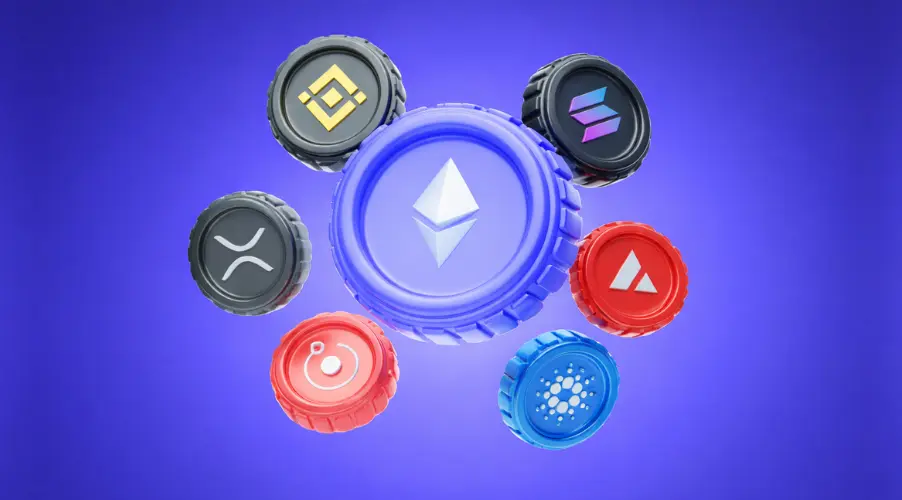
The cryptocurrency market continues evolving rapidly, creating opportunities for investors seeking substantial returns while navigating inherent volatility. As digital assets gain mainstream acceptance among institutions and retail participants, specific cryptocurrencies demonstrate exceptional growth trajectories worth monitoring. This analysis examines seven fastest-growing cryptocurrencies showing strong fundamentals, expanding adoption, and technological innovation positioning them for potential long-term appreciation.
Understanding which digital assets offer genuine growth potential requires examining multiple factors including technological capabilities, real-world adoption, development activity, and market dynamics. The cryptocurrencies highlighted here represent diverse blockchain innovations from established market leaders to emerging platforms addressing specific industry challenges through novel technological approaches.
Key Takeaways
- Bitcoin Maintains Market Leadership: Despite market volatility, Bitcoin continues dominating with institutional adoption, corporate treasury allocations, and potential ETF approvals driving sustained growth prospects.
- Ethereum’s Technological Evolution: The transition to proof-of-stake through Ethereum 2.0 enhances scalability and energy efficiency, strengthening its position powering DeFi and NFT ecosystems.
- Solana’s Speed Advantage: High transaction throughput and minimal fees position Solana as an attractive alternative for developers building decentralized applications requiring performance and cost efficiency.
- Polkadot’s Interoperability Focus: Cross-chain communication capabilities through parachains address critical blockchain fragmentation, enabling seamless data and asset transfer between different networks.
- Chainlink’s Oracle Infrastructure: Decentralized data feeds connecting smart contracts with real-world information prove essential for DeFi protocols requiring reliable external data sources.
- Cardano’s Research-Driven Approach: Peer-reviewed academic foundations and methodical development prioritizing security and sustainability differentiate Cardano in the competitive blockchain landscape.
- Avalanche’s Custom Blockchain Capability: High-performance architecture supporting thousands of transactions per second with custom subnet creation attracts projects requiring specialized blockchain environments.
- Diversification Reduces Risk: Spreading investments across multiple cryptocurrencies with different use cases, technologies, and market positions helps mitigate volatility while capturing various growth opportunities.
Understanding Cryptocurrency Fundamentals
Cryptocurrencies represent digital assets utilizing cryptographic techniques ensuring transaction security and preventing unauthorized duplication or counterfeiting. These decentralized currencies operate on blockchain technology, distributed ledger systems recording transactions across multiple network nodes. This architecture eliminates centralized control while maintaining transparency and immutability of transaction records.
Blockchain networks employ consensus mechanisms validating transactions and maintaining network integrity without requiring trusted intermediaries. Different cryptocurrencies implement various consensus models including proof-of-work, proof-of-stake, and hybrid approaches, each offering distinct advantages regarding security, scalability, and energy efficiency. Understanding these underlying technologies helps investors evaluate long-term viability and growth potential.
Market Dynamics and Growth Drivers
Cryptocurrency valuations respond to multiple interrelated factors creating complex market dynamics. Technological advancement drives adoption as platforms improve scalability, reduce transaction costs, and enhance user experience. Regulatory developments significantly impact market sentiment, with clear frameworks encouraging institutional participation while restrictive policies create uncertainty.
Network effects amplify value as increasing user adoption attracts more developers, creating virtuous cycles where platform utility grows alongside user base expansion. Projects demonstrating strong fundamentals including active development communities, real-world use cases, and sustainable tokenomics tend to outperform during extended market cycles despite short-term volatility.
Bitcoin: Digital Gold Standard
Bitcoin pioneered cryptocurrency as the first decentralized digital currency, establishing foundational principles that subsequent projects build upon. Its fixed supply of 21 million coins creates programmatic scarcity attractive to investors seeking inflation hedges. Bitcoin’s proof-of-work security model, while energy-intensive, provides robust protection against network attacks through computational requirements making manipulation prohibitively expensive.
Institutional Adoption Trends
Corporate treasury allocations to Bitcoin signal growing mainstream acceptance as legitimate asset class. Major corporations including publicly traded companies now hold significant Bitcoin reserves as long-term investments. Payment processors integrating Bitcoin enable merchants to accept cryptocurrency payments, expanding practical utility beyond speculative trading.[1]
Financial product innovation including Bitcoin futures, options, and proposed exchange-traded funds provides traditional investors with familiar instruments for gaining cryptocurrency exposure. These developments lower barriers to entry while potentially increasing capital inflows from institutional portfolios seeking diversification or inflation protection.
Scaling Solutions and Future Development
The Lightning Network represents significant technological advancement enabling faster, cheaper Bitcoin transactions through second-layer payment channels. This solution addresses Bitcoin’s limited base-layer throughput by facilitating off-chain transactions that settle periodically on the main blockchain. As Lightning Network adoption expands, Bitcoin’s utility for everyday transactions improves while maintaining security guarantees.
Ongoing protocol improvements including Taproot enhance privacy and enable more complex smart contract functionality without compromising Bitcoin’s core security model. These incremental upgrades demonstrate continued development activity maintaining Bitcoin’s technological relevance amid evolving blockchain landscape.
Ethereum: Smart Contract Platform Leader
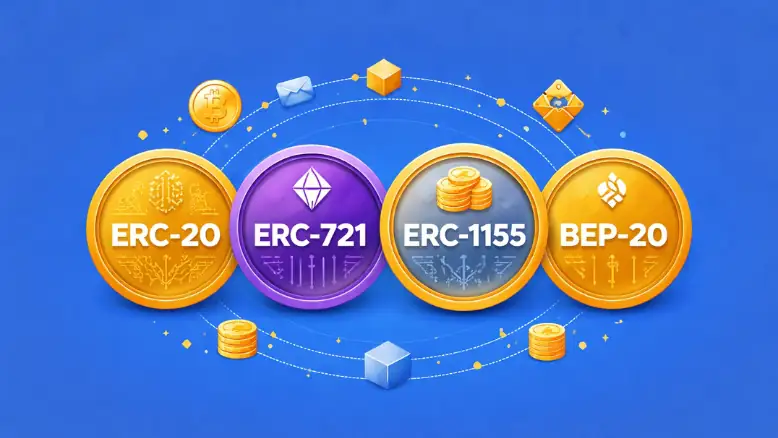
Ethereum established the smart contract paradigm enabling programmable agreements executing automatically when predetermined conditions are met. This capability unlocked decentralized applications spanning financial services, gaming, identity management, and supply chain tracking. The ethereum token standard revolutionized digital asset creation, enabling thousands of projects to launch tokens leveraging Ethereum’s established network effects.
DeFi and NFT Ecosystem Dominance
Decentralized finance protocols built on Ethereum enable lending, borrowing, trading, and yield generation without traditional intermediaries. Total value locked in DeFi applications demonstrates substantial capital allocation to these emerging financial services. Ethereum’s first-mover advantage created strong network effects as developers, users, and capital concentrated on the platform.
Non-fungible tokens emerged as significant use case for blockchain technology, with Ethereum hosting majority of NFT marketplaces and collections. Digital art, collectibles, gaming assets, and membership tokens leverage Ethereum’s infrastructure for verifiable ownership and transparent transfer mechanics. This diverse ecosystem activity drives demand for ETH as network utilization increases.
Ethereum 2.0 Transition and Scalability
The successful merge to proof-of-stake consensus dramatically reduced Ethereum’s energy consumption while maintaining network security through economic incentives rather than computational work. This environmental improvement addresses significant criticism while establishing foundation for future scalability enhancements including sharding.
Layer-2 solutions including rollups extend Ethereum’s transaction capacity by processing computations off-chain while settling final states on the main network. These scaling approaches maintain Ethereum’s security guarantees while achieving significantly higher throughput and lower transaction costs, crucial for mainstream adoption.
Solana: High-Performance Alternative
Solana’s architecture achieves exceptional transaction throughput through novel proof-of-history mechanism coordinating network consensus. This innovation enables processing thousands of transactions per second at fraction of costs compared to Ethereum, attracting developers prioritizing performance and economic efficiency. The platform’s monolithic design contrasts with modular approaches, offering different trade-offs regarding decentralization and scalability.
Developer Adoption and Ecosystem Growth
Solana’s growing developer community builds diverse applications spanning DeFi, NFTs, gaming, and payments. Lower barriers to entry regarding transaction costs enable experimentation and iteration impossible on higher-fee networks. This developer activity creates positive feedback loops as successful applications attract users, further validating platform choices.
Major cryptocurrency exchanges and wallet providers integrate Solana, improving accessibility for users seeking to interact with Solana-based applications. Infrastructure development including block explorers, development tools, and educational resources supports ecosystem expansion and maturation.
Network Stability and Technical Challenges
Solana has experienced network outages raising questions about reliability and decentralization. Development teams address these challenges through protocol improvements enhancing fault tolerance and network resilience. How Solana navigates these growing pains while maintaining performance advantages will significantly impact long-term adoption prospects.
Polkadot: Interoperability Infrastructure
Polkadot’s multi-chain architecture enables specialized blockchains called parachains to operate independently while sharing security and communicating seamlessly. This interoperability vision addresses blockchain fragmentation by creating ecosystem where different chains exchange data and assets without trusted bridges or wrapped tokens compromising security.[2]
Parachain Auctions and Ecosystem Development
Polkadot’s parachain slot auctions create competitive mechanism for projects securing network connectivity. Winners gain access to Polkadot’s shared security model and interoperability features, while DOT holders can support projects through crowdloans potentially receiving project tokens as rewards. This system aligns incentives between network stakeholders and parachain teams.
Diverse parachains addressing different use cases from DeFi to gaming to identity demonstrate Polkadot’s flexible architecture. Cross-chain messaging protocols enable these specialized chains to collaborate, creating composite applications leveraging strengths of multiple parachains simultaneously.
Chainlink: Oracle Network Essential
Smart contracts require external data to execute real-world agreements, but blockchains cannot inherently access off-chain information. Chainlink solves this oracle problem through decentralized network of data providers delivering tamper-resistant inputs to smart contracts. This infrastructure proves essential for DeFi protocols requiring price feeds, weather data, sports results, or other external information.
Enterprise Partnerships and Use Cases
Chainlink’s partnerships span traditional finance, insurance, gaming, and supply chain industries seeking blockchain integration. Major financial institutions experiment with Chainlink for connecting legacy systems to blockchain networks, potentially unlocking institutional capital and mainstream adoption. These enterprise relationships validate Chainlink’s technology while expanding addressable market beyond cryptocurrency-native applications.
Cross-chain interoperability protocols leverage Chainlink’s infrastructure for secure message passing between different blockchains. As blockchain ecosystem becomes increasingly multi-chain, Chainlink’s positioning as neutral infrastructure layer supporting various networks strengthens its strategic importance.
Cardano: Research-Driven Platform
Cardano’s development follows academic peer review process ensuring rigorous analysis before protocol implementation. This methodical approach prioritizes security and long-term sustainability over rapid feature deployment. While sometimes criticized for slow progress, this philosophy aims to avoid costly vulnerabilities and technical debt plaguing faster-moving projects.
Smart Contract Functionality and Adoption
Cardano’s smart contract capabilities through Plutus programming language enable developers to build decentralized applications on the platform. The ecosystem gradually expands as development tools mature and more projects launch. Cardano’s focus on emerging markets including Africa positions it for adoption in regions where traditional financial infrastructure remains underdeveloped.
Governance mechanisms allowing ADA holders to vote on protocol changes and fund development through treasury system create decentralized decision-making process. This community governance approach aims to ensure platform evolution reflects stakeholder preferences rather than centralized foundation control.
Avalanche: Customizable Blockchain Platform
Avalanche’s consensus protocol achieves sub-second finality while maintaining decentralization through novel approach to transaction validation. The platform’s subnet architecture enables creation of custom blockchains with specific rulesets, validator requirements, and virtual machines. This flexibility attracts enterprises and consortiums requiring permissioned or specialized blockchain environments while benefiting from Avalanche’s security model.
DeFi Ecosystem and Bridge Infrastructure
Avalanche’s growing DeFi ecosystem offers alternatives to Ethereum-based protocols with faster transactions and lower fees. Major protocols have launched on Avalanche, bringing total value locked to competitive levels. The platform’s bridge connecting Ethereum enables asset transfers, allowing users to access Avalanche’s benefits while maintaining exposure to Ethereum’s larger ecosystem.
Developer incentive programs funded through Avalanche Foundation support ecosystem growth by subsidizing application development and liquidity provision. These strategic investments aim to jumpstart network effects and establish Avalanche as viable platform for various blockchain use cases beyond cryptocurrency trading.
Investment Considerations and Risk Factors
Cryptocurrency investments carry substantial risks including extreme price volatility, regulatory uncertainty, technological failures, and competitive pressures. Market cycles can produce dramatic price swings disconnected from fundamental value, testing investor conviction during prolonged downturns. Understanding these risks proves essential for appropriate position sizing and emotional preparation for market turbulence.
Diversification and Portfolio Strategy
Spreading investments across multiple cryptocurrencies with different technological approaches, use cases, and market positions helps mitigate risks of individual project failure or underperformance. Bitcoin and Ethereum often serve as core holdings given their established market positions, with smaller allocations to higher-risk, higher-potential alternatives providing growth opportunities.
Regular portfolio rebalancing maintains target allocations as individual holdings appreciate or decline. This disciplined approach forces selling outperformers and buying underperformers, contrary to emotional impulses but potentially improving long-term returns through systematic profit-taking and value purchasing.
Research and Due Diligence
Thorough investigation of project fundamentals including technology, team, adoption metrics, and competitive positioning informs investment decisions. Reading whitepapers, analyzing on-chain data, monitoring development activity, and understanding tokenomics provides insights beyond price movements. Community sentiment and social media hype often create short-term price action disconnected from long-term viability.
Regulatory developments significantly impact cryptocurrency valuations and should be monitored across relevant jurisdictions. Favorable regulations can catalyze institutional adoption, while restrictive policies may limit growth prospects or create legal uncertainties affecting project viability.
Emerging Trends Shaping Cryptocurrency Growth
Real-world asset tokenization represents significant growth opportunity as traditional assets including real estate, commodities, and securities move on-chain. Similar to how tokenized stocks democratize access to equity markets, blockchain technology enables fractional ownership, 24/7 trading, and programmable features impossible with traditional asset structures. Platforms facilitating compliant tokenization could capture substantial value as this market develops.
Central Bank Digital Currencies and Stablecoins
Government-issued digital currencies under development worldwide may increase blockchain adoption while potentially competing with decentralized cryptocurrencies. How CBDCs interact with existing cryptocurrency ecosystems will significantly impact market dynamics. Stablecoins providing price stability continue growing as cryptocurrency on-ramps and trading pairs, with regulatory clarity determining which models succeed long-term.
Layer-2 Scaling and Modular Architectures
Second-layer solutions and modular blockchain designs separating execution, consensus, and data availability layers represent technical evolution addressing scalability challenges. These approaches enable higher throughput while maintaining security properties, potentially unlocking mainstream adoption as user experience improves and costs decrease. Projects successfully implementing scalable architectures may capture significant market share from monolithic blockchain designs.
Conclusion
The fastest-growing cryptocurrencies highlighted demonstrate diverse technological approaches addressing different market needs and use cases. Bitcoin’s established position as digital store of value, Ethereum’s smart contract platform dominance, and emerging alternatives offering performance or specialization advantages create varied investment opportunities across risk-return spectrum.
Successful cryptocurrency investing requires understanding underlying technologies, monitoring adoption metrics, and maintaining appropriate risk management given market volatility. Diversification across multiple projects with strong fundamentals, active development, and real-world adoption provides exposure to blockchain’s transformative potential while mitigating individual project risks.
The cryptocurrency market continues maturing with increasing institutional participation, regulatory clarity, and technological advancement. While short-term price movements remain unpredictable, long-term trends suggest growing integration of blockchain technology into financial systems and beyond. Investors conducting thorough research and maintaining disciplined strategies position themselves to potentially benefit from this ongoing digital transformation.
Frequently Asked Questions
Growth stems from technological innovation, increasing adoption, network effects, institutional investment, regulatory clarity, and market sentiment. projects solving real problems with strong fundamentals tend to outperform during sustained growth periods despite volatility.
Bitcoin remains the largest cryptocurrency by market capitalization with established institutional adoption and infrastructure. its fixed supply and growing acceptance as digital gold equivalent make it core holding for many portfolios despite competition.
Ethereum supports smart contracts and decentralized applications while bitcoin focuses primarily on peer-to-peer value transfer. ethereum’s programmability enables defi, nfts, and complex applications bitcoin’s simpler architecture cannot support natively.
Major risks include price volatility, regulatory uncertainty, technological vulnerabilities, competitive pressures, and potential total loss. thorough research, diversification, and appropriate position sizing help manage these risks for long-term investors.
Diversification reduces exposure to individual project failure while capturing growth opportunities across different blockchain use cases and technologies. spreading investments among established leaders and promising alternatives balances risk and potential returns.
Layer-2 protocols process transactions off main blockchain then settle final states on-chain, dramatically increasing throughput and reducing costs while maintaining underlying security. these scaling solutions prove essential for mainstream blockchain adoption.
Stablecoins provide price stability for cryptocurrency trading, payments, and defi applications by pegging value to fiat currencies. they serve as on-ramps to crypto markets and enable transactions without volatility exposure.
Blockchain technology offers alternatives to traditional financial services but more likely complements existing systems initially. gradual integration through tokenization, cbdcs, and institutional adoption seems more probable than complete replacement.
Reviewed & Edited By

Aman Vaths
Founder of Nadcab Labs
Aman Vaths is the Founder & CTO of Nadcab Labs, a global digital engineering company delivering enterprise-grade solutions across AI, Web3, Blockchain, Big Data, Cloud, Cybersecurity, and Modern Application Development. With deep technical leadership and product innovation experience, Aman has positioned Nadcab Labs as one of the most advanced engineering companies driving the next era of intelligent, secure, and scalable software systems. Under his leadership, Nadcab Labs has built 2,000+ global projects across sectors including fintech, banking, healthcare, real estate, logistics, gaming, manufacturing, and next-generation DePIN networks. Aman’s strength lies in architecting high-performance systems, end-to-end platform engineering, and designing enterprise solutions that operate at global scale.