Key Takeaways
- Ethereum gas fees compensate validators for computational resources used processing transactions and smart contracts on the blockchain
- Gas fees are calculated by multiplying gas limit by gas price, with total costs fluctuating based on network congestion
- Fees are denominated in Gwei, representing one-billionth of an Ether, varying from cents to hundreds of dollars during peak usage
- Failed transactions still consume gas fees because validators expend computational resources attempting execution before discovering errors
- Layer-2 scaling solutions like Arbitrum and Optimism reduce gas costs by 10-100x through off-chain transaction processing
- Ethereum 2.0 upgrades including sharding and proto-danksharding will dramatically lower fees through increased network capacity
- Strategic timing during low-congestion periods like weekends and late nights can significantly reduce transaction costs
- Smart contract optimization through efficient code design minimizes gas consumption and reduces operational expenses
- Real-time gas tracking tools help users monitor current prices and make informed decisions about transaction timing
- Blockchain consulting services provide expertise in gas optimization strategies for businesses across USA, UK, UAE, and Canada markets
Ethereum, the leading platform for decentralized applications and smart contracts, is renowned for its flexibility and extensive use cases across global markets including USA, UK, UAE, and Canada. However, a notable aspect of using Ethereum is the gas fee system, which can sometimes be a source of confusion for new users and developers alike. Understanding Ethereum gas fees is essential for anyone interacting with the blockchain, whether deploying smart contracts, trading tokens, or participating in decentralized finance protocols. These fees represent more than just transaction costs; they reflect the economic mechanisms ensuring network security, preventing spam attacks, and allocating scarce computational resources efficiently among competing users.
The gas fee system introduces dynamic pricing where costs fluctuate based on network demand, creating challenges for businesses planning blockchain projects and users seeking cost-effective transactions. During periods of high activity, gas fees can spike to levels that make small-value transactions economically unviable, while quiet periods offer opportunities for affordable blockchain interaction. This guide explores the mechanics of Ethereum gas fees, calculation methodologies, factors driving price fluctuations, and practical strategies for managing and reducing costs. For businesses and developers, partnering with experienced blockchain consulting services like Nadcab Labs provides valuable insights into optimizing transaction costs and implementing efficient solutions that maximize the benefits of Ethereum while minimizing operational expenses across diverse applications and market conditions.
Core Principles of Ethereum Gas Fee System
Principle 1: Gas fees compensate validators for computational work, ensuring network participants receive fair payment for resources provided.
Principle 2: Dynamic pricing based on demand prevents network congestion by allowing users to prioritize transactions through higher bids.
Principle 3: Gas limits prevent infinite loops and runaway execution by capping maximum computational work per transaction.
Principle 4: Fee burning through EIP-1559 reduces ETH supply while creating deflationary pressure supporting long-term value.
Principle 5: Market-based pricing ensures efficient resource allocation matching supply of block space with user demand.
Principle 6: Spam prevention through costs makes attacking the network economically prohibitive for malicious actors.
Principle 7: Predictable base fees after EIP-1559 improve user experience by reducing price uncertainty and wallet estimation accuracy.
Principle 8: Transparency through on-chain data allows users to verify fees paid and make informed decisions about transaction timing.
What Are Ethereum Gas Fees?
Ethereum gas fees are the costs associated with executing transactions or smart contracts on the Ethereum blockchain, representing payment to validators who process and validate transactions ensuring the network remains secure and functional. These fees are essential for compensating validators for computational work, electricity consumption, hardware maintenance, and bandwidth usage required to execute operations. Gas fees are denominated in Gwei, a smaller unit of Ether where one Gwei equals 0.000000001 ETH or one-billionth of an Ether. This denomination allows for precise pricing of computational operations without requiring cumbersome decimal expressions. Gas fees fluctuate based on network demand and congestion, with high fees occurring during periods of intense activity affecting the cost of transactions and smart contract executions across DeFi protocols, NFT marketplaces, and token transfers.
For businesses and developers operating across USA, UK, UAE, and Canada markets, understanding Ethereum gas fees is crucial when planning blockchain projects requiring predictable operating costs. The fee mechanism serves multiple purposes including spam prevention, resource allocation, and network security. Without gas fees, malicious actors could flood the network with endless transactions consuming all available computational resources and grinding legitimate activity to a halt. By requiring payment for every operation, Ethereum ensures that scarce block space gets allocated to users willing to pay market rates, creating efficient markets for computational resources. A reputable blockchain consulting company, such as Nadcab Labs, can provide valuable insights into optimizing transaction costs and managing gas fees effectively through smart contract optimization, Layer-2 integration, and strategic transaction timing. This expertise helps ensure that projects remain cost-efficient and scalable while navigating the complexities of Ethereum’s fee structure during both quiet periods and network congestion.
How to Calculate Gas Fees on Ethereum?
Calculating Ethereum gas fees requires understanding three key components: gas limit, gas price, and the resulting total fee. The gas limit represents the maximum amount of computational work a transaction can consume, measured in gas units. Simple ETH transfers between wallets typically require 21,000 gas units, representing the baseline cost for basic transactions. More complex operations like smart contract interactions, token swaps on decentralized exchanges, or NFT minting require higher gas limits ranging from 50,000 to several hundred thousand units depending on contract complexity. Setting gas limits too low causes transactions to fail while consuming fees, while excessive limits waste ETH through unnecessarily high caps. Accurate gas limit estimation ensures transactions complete successfully without overpaying.
Determine Gas Limit
The gas limit is the maximum amount of gas that a transaction or smart contract execution can use, establishing an upper bound on computational work performed. For simple transactions like transferring ETH between addresses, a standard limit of 21,000 gas units is usually sufficient and represents the protocol-level minimum for basic transfers. However, complex operations or interactions with smart contracts may require significantly higher limits ranging from 100,000 to 500,000 or more depending on contract logic complexity. Each operation within a smart contract consumes specific gas amounts, with storage operations being particularly expensive. Accurate estimation of the gas limit ensures that your transaction will not run out of gas mid-execution and fail, while avoiding excessive limits that lock up funds unnecessarily during transaction processing. Modern wallets and development tools provide estimation functions analyzing contract code to suggest appropriate limits.
Check Gas Price
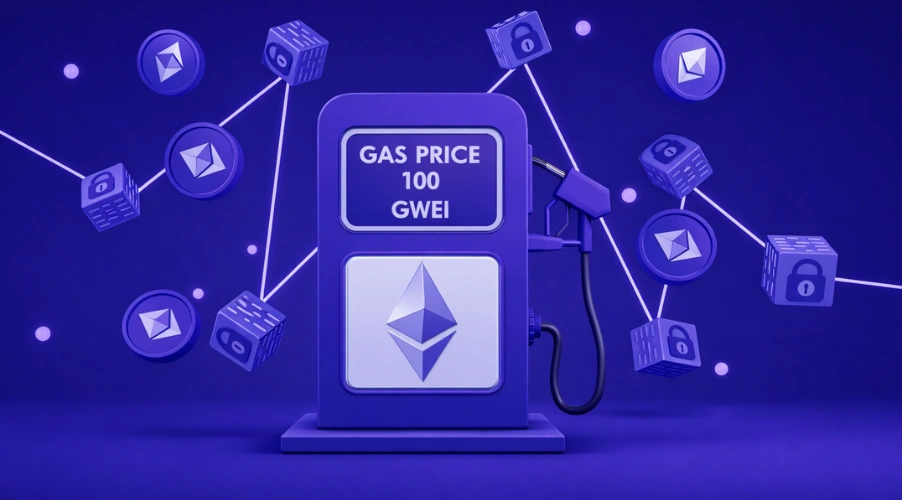
Gas price is the amount you’re willing to pay per unit of gas, measured in Gwei and representing your bid in the fee market for block inclusion. Gas prices fluctuate dramatically based on network congestion, ranging from 10-30 Gwei during quiet periods to 100+ Gwei during peak activity or viral NFT drops. Use online tools like Etherscan Gas Tracker, ETH Gas Station, or wallet-integrated price feeds to find current gas prices before submitting transactions. During periods of high demand such as popular token launches, DeFi protocol exploits, or market volatility driving trading activity, gas prices can increase significantly affecting overall transaction costs. The EIP-1559 upgrade introduced a base fee that adjusts automatically based on network utilization, plus an optional priority fee (tip) that users can add to incentivize faster inclusion by validators seeking maximum extractable value.
Calculate Total Gas Fee
Multiply the gas limit by the gas price to get the total gas fee denominated in Gwei, then convert to ETH by dividing by one billion. The formula is: Gas Fee (in Gwei) = Gas Limit × Gas Price (in Gwei), then Gas Fee (in ETH) = Gas Fee (in Gwei) ÷ 1,000,000,000. For example, a transaction with a 100,000 gas limit at 50 Gwei costs 5,000,000 Gwei or 0.005 ETH. To determine USD cost, multiply the ETH amount by current ETH price. For Ethereum blockchain applications, this calculation helps in budgeting operational expenses and optimizing transaction costs through strategic timing and gas price selection. Understanding that you only pay for gas actually consumed rather than the full limit encourages setting reasonable upper bounds without excessive padding, though unused gas above consumption gets refunded automatically after transaction completion.
Gas Fee Calculation Components
Gas Limit
- Maximum computational work units
- 21,000 for simple ETH transfers
- 100,000+ for smart contracts
- Unused gas gets refunded
Gas Price
- Amount per gas unit in Gwei
- Base fee + priority fee
- Fluctuates with network demand
- Higher prices mean faster inclusion
Total Fee
- Gas Limit × Gas Price formula
- Denominated in Gwei then ETH
- Convert to USD using ETH price
- Only actual gas consumed is charged
Common Ethereum Use Cases and Their Gas Costs
Ethereum’s various use cases come with significantly different gas costs depending on computational complexity and storage requirements. Simple tasks like transferring Ether between wallets consume the minimum 21,000 gas units, resulting in fees typically ranging from $1-5 during normal network conditions across USA and global markets. ERC-20 token transfers require additional gas for updating token contract storage, usually consuming 50,000-80,000 gas units and costing $3-15 depending on gas prices. More complex activities such as interacting with decentralized applications, executing multi-step smart contract operations, or participating in DeFi protocols can be significantly more expensive. Token swaps on decentralized exchanges like Uniswap consume 150,000-300,000 gas as contracts execute pricing calculations, liquidity updates, and token transfers atomically.
For instance, operations in decentralized finance such as providing liquidity, yield farming, or complex lending protocols typically incur higher gas fees ranging from $20-100 during peak periods due to additional computational work involved in interest calculations, collateral management, and multi-contract interactions. Creating Non-Fungible Tokens through minting operations often costs $50-200 depending on contract complexity and whether batch minting is available, with collection launches during high-demand periods sometimes exceeding $500 per mint. Smart contract deployment represents the most expensive operation, with complex contracts costing $500-2000+ during deployment due to bytecode storage costs. To manage these costs effectively across UK, UAE, and Canada operations, it’s beneficial to consult with blockchain consulting services. These experts can help you navigate and optimize gas fees through contract architecture improvements, Layer-2 migration strategies, and operational efficiency enhancements, ensuring that your Ethereum-based projects remain both cost-effective and efficient while maximizing the benefits of the Ethereum network’s capabilities.
How Will Ethereum 2.0 Change Gas Fees?
Introduction of Proof of Stake
Ethereum 2.0 transitioned from Proof of Work to Proof of Stake in September 2022 through The Merge, fundamentally changing how the network achieves consensus while improving energy efficiency by 99.95%. While this transition primarily addressed environmental concerns and centralization risks from mining pools, it laid the groundwork for future scalability improvements. PoS validators stake 32 ETH as collateral rather than consuming electricity for hash calculations, making network participation more accessible and geographically distributed. However, contrary to common misconceptions, The Merge itself did not significantly reduce gas fees because it didn’t increase block space or transaction throughput. The consensus mechanism change maintains similar block times and gas limits as the previous PoW system, meaning transaction capacity remained largely unchanged in the immediate aftermath of the upgrade across USA, UK, and global markets.
Sharding Implementation
Ethereum 2.0 will introduce sharding, a technique that splits the blockchain into smaller, manageable pieces called shards that process transactions in parallel rather than sequentially. This architectural change dramatically increases transaction throughput by allowing multiple shards to process different transactions simultaneously, potentially scaling the network to handle 100,000+ transactions per second compared to current 15-30 TPS limitations. Initially, Ethereum will implement data sharding focused on providing cheap data availability for Layer-2 rollups rather than execution sharding for direct transaction processing. This approach leverages rollups as the primary scaling solution while sharding provides the data infrastructure supporting their operation. The increased capacity will reduce congestion significantly, leading to lower gas fees as the network can process vastly more transactions concurrently without users competing intensely for limited block space during peak activity periods.
Increased Scalability
The cumulative upgrades aim to significantly improve Ethereum’s scalability through multiple complementary approaches working synergistically. By enhancing the network’s capacity to handle exponentially more transactions per second through sharding, rollup optimization, and improved data availability, Ethereum 2.0 will help decrease gas fees substantially by minimizing the impact of network congestion that currently drives prices skyward during peak usage. The rollup-centric roadmap positions Layer-2 solutions as the primary execution environment for most transactions, with mainnet serving as the settlement and data availability layer. This architectural approach allows for massive scaling where hundreds of rollups can operate simultaneously, each processing thousands of transactions per second while anchoring security to Ethereum’s decentralized validator set. The combination of Layer-2 adoption and eventual sharding implementation could reduce effective gas costs by 100-1000x compared to current mainnet transaction fees.
Layer 2 Solutions
Ethereum 2.0 explicitly supports various Layer-2 scaling solutions including Optimistic Rollups and ZK-Rollups, which process transactions off-chain and batch multiple operations into single submissions to mainnet. These solutions currently reduce gas fees by 10-100x compared to mainnet, with transactions costing $0.10-1.00 rather than $5-50 for equivalent operations. EIP-4844 proto-danksharding, scheduled for implementation, will introduce blob transactions providing dedicated data availability space specifically for rollups at dramatically lower costs than current calldata. This upgrade could reduce Layer-2 costs by an additional 10-100x, bringing transaction fees to fractions of a cent while maintaining security through Ethereum settlement. The combination of proto-danksharding and eventual full danksharding creates a scalability roadmap where gas fees become negligible for most users across UAE, Canada, and worldwide markets, enabling use cases like microtransactions, gaming, and social media that are currently economically unviable.
Ethereum 2.0 Scaling Roadmap
Phase 1: The Merge (Completed 2022)
Transition to Proof-of-Stake consensus improving energy efficiency and setting foundation for future upgrades.
Phase 2: EIP-4844 Proto-Danksharding
Introduction of blob transactions reducing Layer-2 costs by 10-100x through dedicated data availability space.
Phase 3: Full Danksharding
Complete data sharding implementation enabling 100,000+ TPS capacity with minimal gas fees for rollup transactions.
Phase 4: Layer-2 Ecosystem Maturity
Widespread rollup adoption with sub-cent transaction costs enabling mainstream Web3 applications globally.
Impact of Ethereum Layer-2 Scaling Solutions on Gas Fees
Ethereum Layer-2 scaling solutions are set to have a significant impact on gas fees by addressing the network’s limitations and improving transaction efficiency dramatically. Layer-2 scaling solutions such as Optimistic Rollups (Arbitrum, Optimism) and ZK-Rollups (zkSync, StarkNet) operate by processing transactions off-chain or on separate execution layers, handling hundreds or thousands of operations more efficiently before batching and settling them on the main Ethereum chain as compressed data. This approach reduces the data load and computational burden on the Ethereum mainnet substantially, alleviating congestion and lowering gas fees for end users by orders of magnitude. The economic model works by amortizing the fixed cost of posting data to mainnet across hundreds of transactions within each batch, making per-transaction costs dramatically lower than executing directly on Layer-1.
By integrating these Layer-2 blockchain solutions, transactions become faster with sub-second soft confirmations and more cost-effective with fees typically ranging from $0.10-1.00 compared to $5-50 on mainnet, as they aggregate multiple operations into single batches or manage interactions off-chain before finalizing them through validity proofs or fraud proof mechanisms on mainnet. This not only helps in minimizing the cost per transaction but also enhances overall network performance by increasing effective throughput without modifying base layer protocol. For businesses and developers across USA, UK, UAE, and Canada markets, leveraging Layer-2 scaling solutions has become essential to optimizing gas fees and improving the efficiency of Ethereum-based applications, with major DeFi protocols, NFT marketplaces, and gaming platforms increasingly deploying on or integrating with Layer-2 networks to provide affordable access to blockchain functionality.[1]
| Network Type | Average Gas Cost | Transaction Speed | Use Cases |
|---|---|---|---|
| Ethereum Mainnet | $5 – $50 | 12-15 seconds | High-value settlements |
| Optimistic Rollups | $0.10 – $1.00 | 1-2 seconds | DeFi, NFTs, General dApps |
| ZK Rollups | $0.01 – $0.50 | Instant finality | Payments, DEXs, Gaming |
| Sidechains (Polygon) | $0.001 – $0.01 | 2 seconds | High-frequency transactions |
| State Channels | Nearly Free | Instant | Micropayments, Gaming |
How to Manage and Reduce Ethereum’s Gas Fees
Managing and reducing Ethereum’s gas fees involves several strategic approaches that combine technical optimization with operational planning. One effective method is to optimize smart contracts and transactions to minimize their gas consumption through efficient code design, avoiding unnecessary storage operations, using appropriate data types, and eliminating redundant calculations. This can be achieved by refining contract code to be more gas-efficient through techniques like packing variables into single storage slots, using memory instead of storage where possible, implementing batch operations rather than individual function calls, and avoiding complex operations that consume excessive gas during execution. Additionally, choosing optimal times for transactions when network congestion is lower can help reduce gas costs significantly, with weekends, late nights in USA time zones, and holiday periods typically showing decreased activity and correspondingly lower gas prices.
Utilizing Layer-2 scaling solutions such as Arbitrum, Optimism, zkSync, or Polygon represents perhaps the most impactful gas reduction strategy, offering 10-100x cost savings compared to mainnet while maintaining security through Ethereum settlement. These solutions process transactions off-chain before batching results and posting compressed data to mainnet, dramatically reducing per-transaction costs for users. Setting appropriate gas price limits based on transaction urgency allows non-critical operations to wait for favorable pricing rather than overpaying during congestion. Gas tokens historically provided hedging mechanisms during extreme fee spikes, though EIP-1559 reduced their effectiveness. Transaction batching combines multiple operations into single submissions amortizing fixed costs across many actions. For more tailored strategies serving UK, UAE, Canada, and USA markets, engaging with custom blockchain consulting solutions can provide valuable insights into implementing efficient smart contract designs, choosing the best Layer-2 solutions for specific use cases, and providing guidance on managing transaction timing to effectively control gas fees while maintaining required performance and security characteristics. Expertise in these areas ensures businesses and developers make the most out of Ethereum’s capabilities while keeping operational costs manageable and predictable.
Gas Fee Reduction Strategies
Smart Contract Optimization
- Efficient code architecture
- Storage slot packing
- Minimize storage operations
- Use memory over storage
Strategic Timing
- Transact during off-peak hours
- Monitor real-time gas prices
- Weekend & late night scheduling
- Avoid viral event periods
Layer-2 Migration
- Deploy on Arbitrum or Optimism
- Use zkSync for payments
- Bridge assets to Layer-2
- 10-100x cost reduction
Why Are Gas Fees Charged for Failed Transactions?
Gas fees are charged for failed Ethereum transactions due to the computational resources required to process and validate them, even when execution ultimately fails before completion. When a transaction is submitted to the network, even if it eventually fails, it consumes network resources such as processing power, memory allocation, bandwidth for transaction propagation, and storage space during execution attempts. The Ethereum network must execute the transaction code step-by-step, check its validity through signature verification and nonce confirmation, attempt to execute smart contract logic consuming gas for each operation, verify state changes and balance requirements, and potentially update the blockchain state before discovering the failure condition that causes transaction reversion. If a transaction fails due to insufficient funds, smart contract errors like require statement failures, out-of-gas errors, or logical conditions not being met, the gas fee compensates miners or validators for their work in processing the transaction up to the point of failure.
This mechanism ensures that network resources are used efficiently and discourages frivolous, faulty, or malicious Ethereum transactions that could spam the network if they cost nothing when failing. Without charging fees for failed transactions, attackers could flood the network with invalid operations consuming validator resources without economic consequence, degrading service for legitimate users. Understanding this aspect is crucial for effective blockchain technology management and optimizing transaction strategies to avoid wasted fees. Developers should test transactions thoroughly on testnets before mainnet deployment, verify sufficient ETH balances cover both transaction value and gas costs, set appropriate gas limits preventing out-of-gas failures, validate smart contract parameters before submission, and implement error handling in applications to prevent common failure scenarios. For businesses operating across Canada, UAE, UK, and USA markets, proper testing and validation procedures minimize failed transactions and associated wasted gas fees, improving operational efficiency and user experience while reducing unnecessary blockchain costs.
How to Check Ethereum’s Gas Fees
Checking Ethereum’s current gas fees is essential for timing transactions optimally and avoiding overpayment during network congestion. Multiple tools and platforms provide real-time gas price information with varying levels of detail and forecasting capabilities. Gas fee websites like Etherscan Gas Tracker, ETH Gas Station, and Gas Now provide comprehensive real-time information on Ethereum gas fees across different priority levels. These platforms show current gas prices in Gwei for slow, average, and fast transaction confirmations, allowing you to estimate the cost of your transactions based on urgency requirements. Most services display historical gas price charts helping identify typical patterns and optimal timing windows for cost-sensitive operations.
Use Gas Fee Websites
Websites like Gas Now, Etherscan, or EthGasStation provide real-time information on Ethereum gas fees with detailed breakdowns of current network conditions. These platforms show current gas prices in Gwei across different confirmation speed categories, historical trends revealing optimal transaction timing, pending transaction counts indicating network congestion levels, and estimated confirmation times for various gas price levels. Advanced features include gas price predictions using machine learning models, customizable alerts for when fees drop below specified thresholds, and API access for automated monitoring systems. Many platforms also show the breakdown between base fee and priority fee after EIP-1559, helping users understand fee composition and set appropriate priority tips for desired confirmation speeds serving users worldwide including USA, UK, UAE, and Canada markets.
Monitor Through Wallets
Many Ethereum wallets such as MetaMask, Trust Wallet, Rainbow Wallet, and Coinbase Wallet display current gas prices directly within their interfaces and offer options to set custom gas fees based on network congestion and user preferences. This helps you manage fees directly from your wallet interface without needing external tools. Wallet gas estimations typically show low, medium, and high fee options corresponding to different confirmation time expectations, with more advanced wallets allowing granular control over base fee and priority fee components. Some wallets implement gas fee optimization automatically, monitoring network conditions and suggesting optimal prices for transaction submission. This integration simplifies gas management for non-technical users while providing advanced controls for sophisticated users seeking maximum cost optimization.
Check with Blockchain Explorers
Blockchain explorers like Etherscan offer detailed transaction data and historical gas fee information beyond simple current price displays, allowing you to see past gas prices, identify trends over time, and understand how fees correlate with network activity patterns. These platforms provide comprehensive analytics including average daily gas prices, gas usage by contract address identifying which applications drive congestion, pending transaction pools showing current competition for block space, and individual transaction details revealing exact gas consumption and fees paid. This historical perspective helps users develop intuition about typical fee ranges during different times and conditions, improving decision-making around transaction timing and gas price selection for cost optimization.
Use API Services
For developers and advanced users, various APIs including Etherscan API, EthGasStation API, Blocknative Gas Platform, and custom RPC endpoints provide programmatic gas fee data that can be integrated into applications to dynamically check and manage fees according to specific project requirements. These services enable automated monitoring systems, custom alert mechanisms triggering notifications when fees drop below thresholds, application-level gas optimization adjusting transaction submission based on current conditions, and sophisticated transaction management strategies including queuing, batching, and conditional execution based on gas price levels. API integration allows businesses to build intelligent transaction systems that optimize costs automatically without manual intervention, particularly valuable for high-volume operations across global markets.
Why Do Gas Fees Fluctuate on Ethereum?
Gas fees on Ethereum fluctuate dramatically due to several interconnected factors related to network demand dynamics and blockchain capacity constraints. The primary reason for fluctuations is variable network congestion where many users simultaneously attempt to execute transactions or interact with smart contracts during popular events like NFT drops, DeFi protocol launches, or market volatility episodes, leading to intense competition for limited block space. When transaction demand exceeds available capacity, users bid higher gas prices to prioritize their transactions for inclusion in upcoming blocks, creating auction-like dynamics where fees spike during peak periods. Ethereum processes approximately 15-30 transactions per second with finite block space determined by gas limits, creating supply-demand imbalances during high-activity periods that drive prices upward rapidly.
Additionally, gas fees are influenced by transaction complexity since more complex operations requiring extensive computational resources, numerous storage writes, or multiple contract interactions incur higher fees than simple ETH transfers consuming only 21,000 gas units. Market dynamics also play significant roles, as users may offer substantially higher gas prices to prioritize their transactions during time-sensitive opportunities like arbitrage trades, liquidation events in DeFi protocols, or competitive NFT minting. Time-of-day patterns emerge with higher activity during USA and European business hours when trading, DeFi interaction, and business operations concentrate, while weekends and late nights typically show reduced congestion. Unpredictable events including protocol exploits requiring emergency responses, viral social media campaigns driving sudden NFT interest, or macroeconomic news triggering trading surges create temporary but severe fee spikes. This dynamic fluctuation ensures that the network remains secure and efficient by adjusting fees according to current demand and resource availability, but creates challenges for users and businesses across UK, UAE, Canada, and global markets seeking predictable costs. Understanding these patterns helps optimize transaction timing and fee budgeting for cost-conscious Ethereum users.
Critical Gas Fee Management Best Practices
Practice 1: Always verify sufficient ETH balance covers both transaction value and estimated gas costs before submission.
Practice 2: Test complex transactions on testnets before mainnet deployment to avoid failed transaction fees.
Practice 3: Monitor real-time gas prices using trackers before submitting time-flexible transactions for optimal pricing.
Practice 4: Utilize Layer-2 solutions for frequent transactions achieving 10-100x cost reduction versus mainnet.
Practice 5: Batch multiple operations into single transactions when possible to amortize fixed costs efficiently.
Practice 6: Set appropriate gas limits based on operation complexity avoiding both out-of-gas failures and excessive padding.
Practice 7: Optimize smart contract code minimizing storage operations and using efficient data structures to reduce gas consumption.
Practice 8: Consider transaction urgency when setting gas prices allowing flexible operations to wait for favorable market conditions.
What Solutions Does Nadcab Labs Offer for Gas Fees?
Nadcab Labs, a leading blockchain consulting company with extensive experience serving clients across USA, UK, UAE, and Canada markets, offers a comprehensive range of solutions to address Ethereum gas fees effectively through technical optimization and strategic planning. By leveraging advanced optimization techniques and deep expertise in Ethereum blockchain ecosystems, they provide tailored strategies to manage and reduce gas costs for businesses and developers operating decentralized applications. Their approach includes smart contract optimization through efficient code architecture, minimizing storage operations, implementing gas-efficient algorithms, and leveraging best practices established through years of production deployments. Code auditing services identify gas-intensive operations and suggest refactoring approaches that maintain functionality while dramatically reducing computational costs.
Additionally, Nadcab Labs assists clients with gas fee forecasting using historical data analysis and network monitoring to predict optimal transaction timing, strategic adjustments based on real-time network conditions including automated fee management systems, and comprehensive Layer-2 integration strategies helping businesses migrate appropriate operations to scaling solutions like Arbitrum, Optimism, or zkSync. They provide end-to-end support for Layer-2 deployment including smart contract adaptation, bridge integration, user migration planning, and ongoing optimization as Layer-2 ecosystems evolve. Custom solutions address specific business requirements whether optimizing high-frequency trading applications, reducing NFT minting costs, or implementing cost-effective DeFi protocols. These solutions are designed to enhance overall efficiency and cost-effectiveness for businesses and developers interacting with the Ethereum network, ensuring projects remain financially viable while delivering superior user experiences. Their consulting services help clients navigate the complex trade-offs between cost, speed, and security while building sustainable blockchain applications.
Optimize Your Ethereum Gas Costs with Expert Guidance
Partner with Nadcab Labs for comprehensive blockchain consulting services specializing in gas fee optimization, Layer-2 integration, and smart contract efficiency across global markets.
Frequently Asked Questions
Ethereum gas fees are determined by network congestion levels, transaction complexity requiring more computational work, and user-set gas prices bidding for block inclusion priority. Post-EIP-1559, fees include an algorithmically-determined base fee that adjusts based on network utilization plus optional priority tips for faster confirmation.
Gas fees are typically lowest during weekends, particularly Saturday and Sunday mornings UTC, and late night hours in USA time zones between 2AM-6AM EST when business and trading activity decreases. However, unpredictable events can spike fees regardless of typical patterns, making real-time monitoring essential.
Layer-2 solutions reduce gas fees by 10-100x compared to Ethereum mainnet, with typical transactions costing $0.10-1.00 on Optimistic Rollups and $0.01-0.50 on ZK-Rollups versus $5-50 on mainnet. Future upgrades like proto-danksharding could reduce costs by another 10-100x factor.
You can replace or cancel pending transactions by submitting a new transaction with the same nonce and higher gas price. This causes validators to include the replacement transaction instead of the original, effectively canceling it. However, you still pay gas fees for the replacement transaction.
Gas limit is the maximum computational work units a transaction can consume, set by the sender to cap maximum costs. Gas price is the amount paid per gas unit in Gwei, determining transaction priority. Total fee equals gas consumed multiplied by gas price, with unused gas refunded.
EIP-1559 introduced a base fee that adjusts algorithmically based on network congestion, providing more predictable pricing. It also burns the base fee rather than giving it to validators, creating deflationary pressure on ETH supply. Users add optional priority fees for faster inclusion.
Ethereum 2.0 upgrades including sharding and Layer-2 ecosystem maturation will dramatically reduce but not eliminate gas fees. While fees should drop to cents rather than dollars for most operations, popular applications during viral events may still experience temporary congestion and elevated costs requiring continued fee management.
Businesses should analyze historical gas price data establishing typical ranges, implement automated monitoring alerting to price changes, utilize Layer-2 solutions for predictable lower costs, maintain contingency budgets for fee spikes, and consult blockchain experts for optimization strategies tailored to specific operations and use cases.
Reviewed & Edited By

Aman Vaths
Founder of Nadcab Labs
Aman Vaths is the Founder & CTO of Nadcab Labs, a global digital engineering company delivering enterprise-grade solutions across AI, Web3, Blockchain, Big Data, Cloud, Cybersecurity, and Modern Application Development. With deep technical leadership and product innovation experience, Aman has positioned Nadcab Labs as one of the most advanced engineering companies driving the next era of intelligent, secure, and scalable software systems. Under his leadership, Nadcab Labs has built 2,000+ global projects across sectors including fintech, banking, healthcare, real estate, logistics, gaming, manufacturing, and next-generation DePIN networks. Aman’s strength lies in architecting high-performance systems, end-to-end platform engineering, and designing enterprise solutions that operate at global scale.