Key Takeaways
The multi chain future of blockchain is here. In 2026, no single blockchain dominates. Ethereum, Solana, BNB Chain, Arbitrum, Base, and dozens of other networks each power their own thriving ecosystems.
But with opportunity spread across so many chains comes a critical challenge: how do you move assets quickly, safely, and affordably between different blockchains? The answer lies in cross chain swap protocols.
Cross chain swap protocols have become essential infrastructure for traders, developers, DeFi users, and enterprises operating across multiple blockchains. These protocols allow you to swap tokens directly between different networks without relying on centralized exchanges, wrapped tokens, or risky manual bridging processes.
But with dozens of options available, choosing the right protocol can be overwhelming. Which ones offer the best security? Which are the fastest? Which support the most chains? And which are built to handle the demands of 2026’s rapidly evolving blockchain landscape?
This in depth guide ranks the best 7 cross chain swap protocols for blockchain in 2026, breaking down their features, supported chains, strengths, limitations, and ideal use cases. Whether you are a beginner making your first cross chain transfer or an enterprise building multi chain applications, this article will help you make an informed decision.
What Are Cross Chain Swap Protocols?
A cross chain swap protocol is a decentralized technology that allows users to exchange tokens or digital assets between two or more different blockchain networks directly, without needing a centralized exchange or custodial intermediary.
Simple Analogy: Imagine you have dollars but need euros for a trip. A traditional currency exchange shop charges high fees and takes time. A cross chain swap protocol is like an instant, automated currency converter that gives you the best rate with minimal fees, and you never hand over your wallet to anyone.
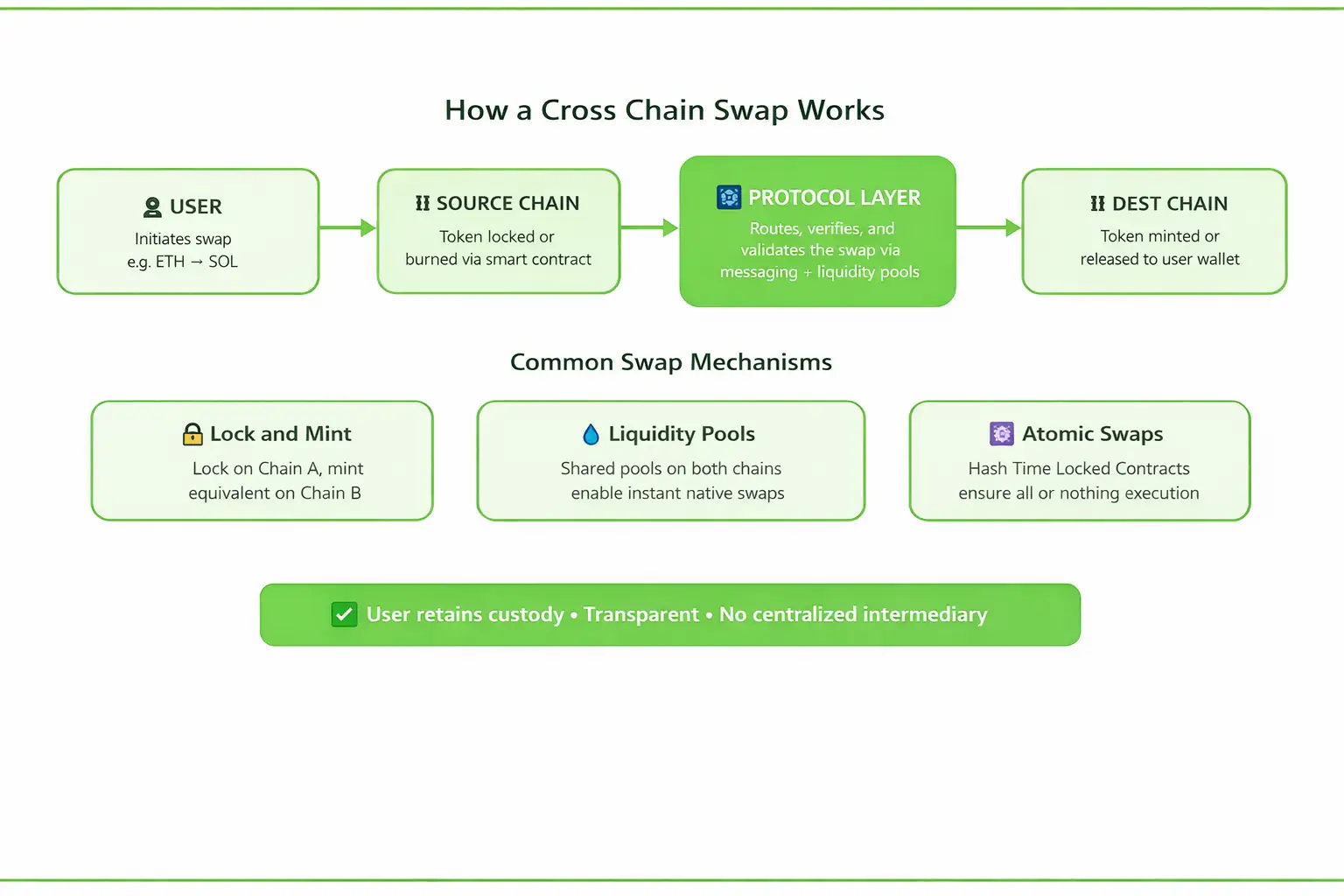
These protocols use a combination of smart contracts, liquidity pools, cross chain messaging systems, and sometimes atomic swap technology to make transfers happen seamlessly. The goal is to let users move value between chains while maintaining decentralization, security, and speed.
Why Cross Chain Swap Protocols Matter in 2026
The blockchain ecosystem in 2026 is fundamentally multi chain. Here is why cross chain swap protocols have become indispensable infrastructure.
Fragmented Liquidity
With $128+ billion TVL spread across dozens of chains, liquidity is scattered. Cross chain swaps unify access.
Speed Demands
Traders need instant transfers. Modern protocols complete swaps in under 60 seconds across chains.
Security Evolution
$2.8B+ in bridge hacks drove protocols to adopt ZK proofs, audits, and decentralized validation.
Regulatory Push
MiCA, GENIUS Act, and UK FCA rules demand compliant, transparent cross chain operations.
How Cross Chain Swap Protocols Work: Visual Flowchart
The Best 7 Cross Chain Swap Protocols for 2026
Complete Comparison: All 7 Cross Chain Swap Protocols
| Protocol | Chains | Type | Native Swaps | Speed | Best For |
|---|---|---|---|---|---|
| THORChain | 16+ | Liquidity Pools | ✅ Yes | ~30 sec | BTC/ETH native swaps |
| Stargate | 40+ | Unified Liquidity | ✅ Yes | ~15 sec | Guaranteed finality |
| Symbiosis | 60+ | AMM DEX | ✅ Yes | ~20 sec | Max chain coverage |
| LI.FI | 30+ | Aggregator | ⚡ Via Sources | Varies | Best route optimization |
| Synapse | 20+ | Bridge + AMM | ⚡ Partial | ~60 sec | Lowest fees |
| Wormhole | 30+ | Messaging | ❌ Wrapped | ~90 sec | Non EVM chains |
| Meson | 60+ | HTLC Atomic | ✅ Yes | ~20 sec | Stablecoin transfers |
How to Choose the Right Protocol: Decision Flowchart
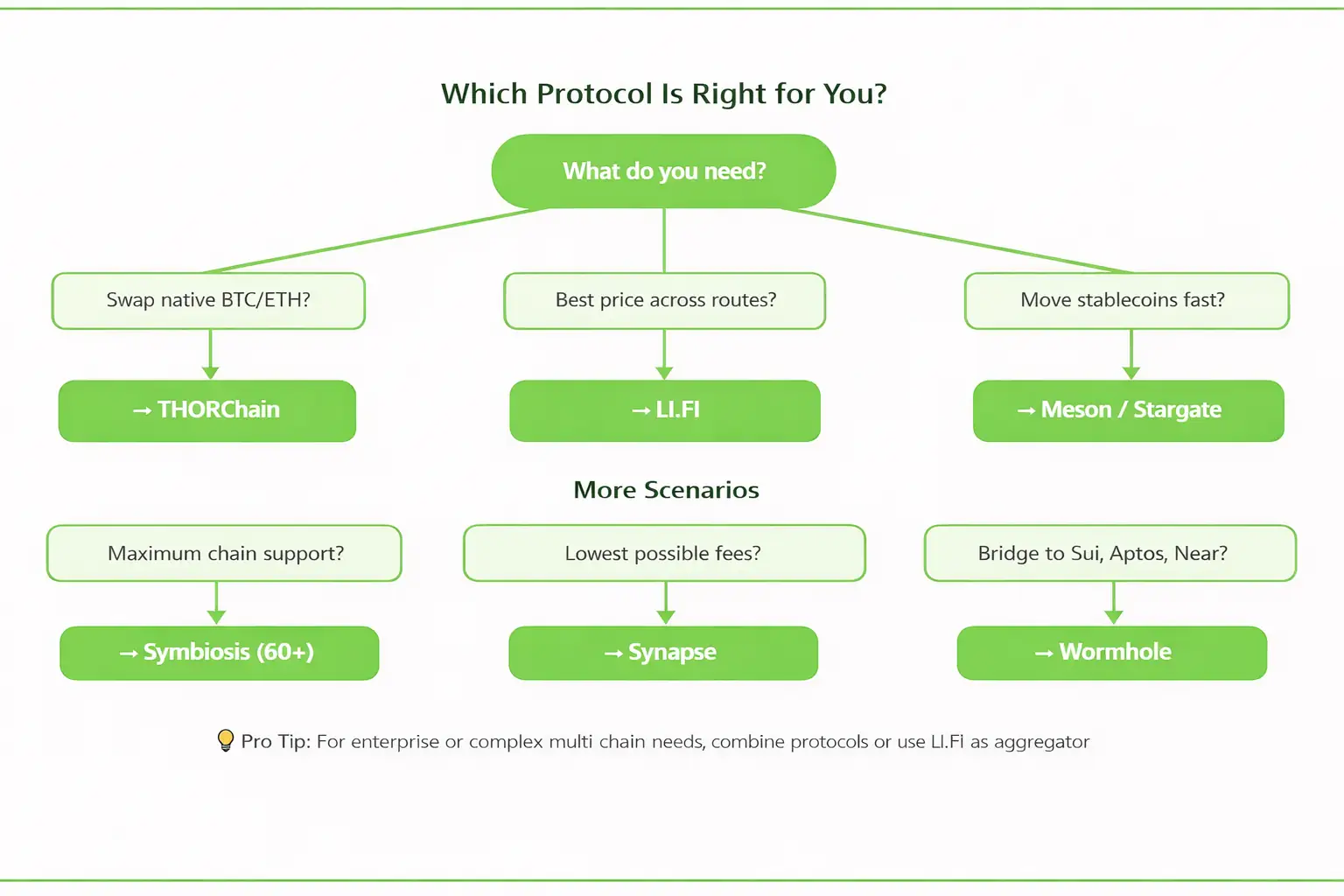
Pro Tip: For enterprise or complex multi chain needs, combine protocols or use LI.FI as aggregator
Security Best Practices for Cross Chain Swaps
According to the World Economic Forum, cross chain bridges have been one of the most targeted sectors in DeFi, with cumulative hack losses exceeding $2.8 billion. Protecting yourself requires following established safety practices.
Test with Small Amounts
Always send a small test transaction before bridging large sums, especially on routes you have not used before.
Verify Contracts
Double check smart contract addresses against official documentation. Scammers create fake bridge interfaces.
Use Audited Protocols
Stick with protocols that have been operating for at least 6 months and have significant TVL and third party audits.
Monitor Transactions
Keep transaction hashes and monitor completion on both source and destination networks until confirmed.
Diversify Protocols
Do not route all your assets through a single bridge. Even the best protocols can experience issues.
Check Network Congestion
Bridge times vary dramatically based on network conditions. Avoid peak congestion periods for time sensitive transfers.
Future Trends Shaping Cross Chain Swaps in 2026 and Beyond
Why Cross Chain Protocols Matter for Businesses and Enterprises
Cross chain technology is not just for individual traders. Enterprises, fintech companies, and startups are increasingly building products and services that span multiple blockchains.
Multi Chain DeFi Platforms
Businesses building DeFi products need cross chain infrastructure to serve users across Ethereum, Solana, BNB Chain, and L2s simultaneously.
Treasury Management
Enterprises holding assets on multiple chains need efficient tools to consolidate, rebalance, and deploy capital across networks.
Gaming and NFTs
Web3 games and NFT platforms need cross chain bridges to allow players and collectors to move assets between gaming chains.
Custom Protocol Development
Organizations may need custom cross chain solutions tailored to their specific business logic, compliance, and security requirements.
Build with Confidence: Enterprises looking to build or integrate cross chain swap capabilities can partner with experienced blockchain development firms. Nadcab Labs provides end to end blockchain solutions including cross chain protocol integration, smart contract development, bridge auditing, custom dApp development, and Web3 consulting to help organizations navigate the multi chain landscape with confidence.
Build Cross Chain Solutions with Nadcab Labs
Need to integrate cross chain swap functionality into your platform? Building a multi chain DeFi product from scratch?
Nadcab Labs is a trusted blockchain development company specializing in cross chain protocol integration, smart contract engineering, bridge security audits, token systems, dApp development, and Web3 infrastructure consulting.
Conclusion
The multi chain blockchain ecosystem of 2026 demands robust, secure, and efficient cross chain swap protocols. Whether you are a trader moving assets between Ethereum and Solana, a developer building a multi chain dApp, or an enterprise deploying DeFi infrastructure, the seven protocols featured in this guide represent the best options available today.
THORChain leads for native asset swaps. Stargate offers guaranteed finality. Symbiosis provides the widest chain coverage. LI.FI optimizes routes across all bridges. Synapse delivers the lowest fees. Wormhole excels at non EVM connectivity. And Meson pioneers atomic swaps for stablecoins.
As AI powered routing, zero knowledge security, intent based architectures, and regulatory compliance frameworks reshape the landscape, cross chain swap protocols will only become more important. The future of blockchain is interoperable, and these seven protocols are leading the way.
Frequently Asked Questions
A bridge transfers the same asset from one chain to another (e.g., moving USDC from Ethereum to Polygon). A cross chain swap exchanges one asset on one chain for a different asset on another chain (e.g., trading ETH on Ethereum for SOL on Solana). Many modern protocols combine both capabilities.
Yes. Most protocols are accessible through mobile wallet browsers like MetaMask Mobile and Trust Wallet. Some protocols like Symbiosis and THORSwap also have mobile optimized web interfaces for convenient on the go swapping.
Typically yes. You pay gas on the source chain to initiate the transaction, and the protocol may charge a fee that covers destination chain costs. Some protocols like Stargate offer options to receive gas tokens on the destination chain automatically.
Reputable protocols have fail safe mechanisms. Atomic swap protocols like Meson guarantee all or nothing execution. Other protocols offer transaction recovery tools and support channels. Always save your transaction hash for troubleshooting.
In many jurisdictions, swapping one cryptocurrency for another is a taxable event regardless of whether it happens on one chain or across chains. Consult a tax professional familiar with cryptocurrency regulations in your country.
Yes. Protocols like LI.FI, Wormhole, and Symbiosis offer SDKs and APIs that developers can integrate into custom applications. For businesses needing tailored solutions, blockchain development companies like Nadcab Labs can build custom cross chain integrations.
Most protocols allow users to set maximum slippage tolerance before confirming a swap. If the price moves beyond your set tolerance during execution, the transaction is automatically cancelled to protect you from unfavorable rates.
Aggregators like LI.FI add convenience and price optimization but introduce dependency on multiple protocols. Single bridge protocols like THORChain offer simpler trust assumptions. The safest approach depends on your risk tolerance and the specific swap route you need.
Yes. Many protocols including THORChain, Stargate, and Symbiosis allow users to provide liquidity to cross chain pools and earn a share of swap fees. Some also offer additional token rewards for liquidity providers.
Cross chain protocols are rapidly closing the gap in speed and ease of use. However, centralized exchanges still offer advantages in fiat on ramps, customer support, and regulatory compliance. The future likely involves both coexisting, with cross chain protocols dominating crypto to crypto transfers.
Reviewed & Edited By

Aman Vaths
Founder of Nadcab Labs
Aman Vaths is the Founder & CTO of Nadcab Labs, a global digital engineering company delivering enterprise-grade solutions across AI, Web3, Blockchain, Big Data, Cloud, Cybersecurity, and Modern Application Development. With deep technical leadership and product innovation experience, Aman has positioned Nadcab Labs as one of the most advanced engineering companies driving the next era of intelligent, secure, and scalable software systems. Under his leadership, Nadcab Labs has built 2,000+ global projects across sectors including fintech, banking, healthcare, real estate, logistics, gaming, manufacturing, and next-generation DePIN networks. Aman’s strength lies in architecting high-performance systems, end-to-end platform engineering, and designing enterprise solutions that operate at global scale.